

Putting an I in Healthcare
The days of the disengaged health consumer are numbered. Consumerization will transform healthcare systems, involving individuals as never before in the management of their own care.
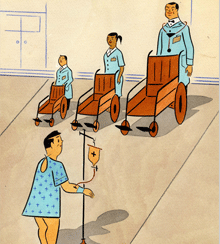
Illustrations by Michael Klein
In a shopping center on the western outskirts of Harrisburg, Penn., sandwiched among a women’s clothing shop, a pet supply store, and a dental clinic, sits a window into the future of healthcare in the United States: Highmark Direct. Open since 2009, it is part of a small chain of nine retail health insurance stores scattered across Pennsylvania owned and operated by Highmark Inc., the fourth-largest plan in the Blue Cross and Blue Shield Association, which serves 4.9 million members in Pennsylvania, West Virginia, and Delaware.
The retail stores run by Highmark, a US$14.8 billion, diversified health-services company, are a direct channel into the growing market for individual health insurance created by a combination of reform and budget-strained employers, many of whom are off-loading healthcare coverage decisions and costs to their employees. Consumers walk in or make appointments for consultations with Highmark’s licensed agents, who help them navigate the often confusing world of health insurance and assist them in identifying and applying for coverage. Seniors attend informational seminars that explain their Medicare coverage and supplemental insurance needs. Plan members learn how to better manage their own health with Highmark’s wellness programs, and can contact customer service via self-service kiosks and videoconferencing.
The last few years have seen a handful of other U.S. health insurers enter the bricks-and-mortar retail business, including Florida Blue (a licensee of the Blue Cross and Blue Shield Association), which operates a chain of 11 stores stretching the length of its state, and United Healthcare, which opened 30 pop-up stores and more than 1,400 kiosks in shopping malls in October 2012. These companies are being driven by a nascent trend that is quickly becoming an industry imperative: the consumerization of healthcare.
Health insurance stores are only one of its manifestations—other consumerization initiatives are currently under way among insurers, care providers, and pharmaceutical companies. Accountable care organizations, for example, are beginning to tie physician compensation to population health. Healthcare bundles combine medical care, coverage, and support across a care episode or condition—such as a knee replacement or coronary bypass surgery—at a fixed, risk-adjusted price. And capitation payment contracts pay providers an annual rate per patient, no matter how much care they require. These and other efforts skim the surface of a game-changing industry transition.
The word consumerization has several meanings, but we use it here to describe the transformation of an industry from a primarily business-to-business (B2B) enterprise to one that focuses on business-to-consumer (B2C) activities. In today’s B2B health marketplace, business is transacted among large employers, payors, providers, and pharmaceutical companies. The people being insured and treated have little involvement in or responsibility for their own care and cost choices. In the years ahead, healthcare will evolve into a B2C industry, in which consumers will take a much more active role in their healthcare decisions and expenditures. And, as a result, every healthcare company and organization will need to become more consumer-centric. The deck is being reshuffled, and there will be new winners and new losers, depending on how companies play their hand.
This shift is both a reaction to and a result of the state of healthcare systems around the world, which are characterized by high costs, lack of access, and unsatisfactory outcomes. The U.S. system has been in the spotlight for years because of double-digit cost inflation, frustratingly complex patient experiences, and, most recently, the controversial Affordable Care Act. But the much-lauded, publicly funded healthcare systems in nations such as Canada and the United Kingdom are coming under pressure, too, as their foundation in fixed-budget, capitation-based care is strained by rising healthcare costs and demand. This is creating allocation challenges; for example, the benchmark target wait time for a knee replacement in Canada was 182 days in 2011, and 25 percent of patients were not served within that period. It is also creating equity challenges: In the U.K., a secondary healthcare system is developing, which calls into question the viability of universal healthcare. Private medical insurers, hospitals, and care providers are springing up to answer the demands of consumers who want more timely care and can afford to pay for it.
Meanwhile, in developing countries, the struggle to extend basic healthcare to large portions of the population has been intensified by an explosion of “developed nation” diseases. A 2011 study by the World Economic Forum and the Harvard School of Public Health estimated that the cumulative costs of noncommunicable diseases—including cardiovascular disease, chronic respiratory disease, and cancer—in low- and middle-income countries would surpass $7 trillion by 2025. Diabetes is a case in point. Five of the 10 countries with the highest national prevalence of diabetes are in the Middle East. In Mexico, Type 2 diabetes is the leading cause of death among adults. And there are 92 million people with the disease in China and 63 million in India, according to the International Diabetes Federation.
These global healthcare challenges have revealed the cracks in the industry’s current operating models, and they demand a new way of thinking. The idea of consumer-driven healthcare has been around for years, but now healthcare companies are being forced to act. The U.S. is the bellwether in this regard. The Supreme Court’s upholding of the Affordable Care Act and the reelection of President Barack Obama in 2012 have effectively ended the debate on whether to pursue reform and turned the industry’s attention to how to achieve it. Thus, U.S. health insurers, care providers, and pharmaceutical companies are experimenting with a host of new models and technologies that should be replicable in the healthcare systems around the world.
Many of these innovative solutions are based on fundamentally sound ideas for cutting costs and improving care outcomes. But unless and until the consumer is positioned at the center of the healthcare industry, it is highly unlikely that such concepts will deliver their full potential. Just look at the fate of HMOs (health maintenance organizations) in the United States. In the 1990s, HMOs produced lower costs and provided care comparable to that of other healthcare benefit models. But because HMOs disenfranchised their members by imposing constraints on where they could go to obtain care and placed limits on the amount of care they could receive, they created a consumer backlash, and many of them failed.
The lesson: To successfully cure the systemic ills of healthcare in the U.S. and elsewhere, the industry will have to promote and support more control, awareness, and responsibility on the part of the healthcare consumer. The digital enablers of consumerization—big data, cloud computing, telemedicine, and social media—are already at hand, and can be leveraged by forward-thinking executives. Eventually, as consumer-focused initiatives multiply and their effects reverberate throughout the industry, they could bring about a dramatic improvement in health and a transformational reduction in costs.
Influencing Consumer Behavior
A fundamental reframing of the consumer’s role on the part of healthcare companies is a prerequisite for sustainable healthcare systems, because consumer behavior has an outsized influence on the demand for care and care outcomes. In the United States, fully 40 percent of deaths are attributable to behavioral factors—more than factors such as genetics, environment, and socioeconomics. And according to the American Medical Association, 25 percent of the United States’ total annual healthcare expenditures are the result of behaviors that could be changed, such as smoking, lack of exercise, and poor diet.
Furthermore, once people become ill, their behavior often exacerbates their condition, as many are unwilling or unable to complete their treatment. The lack of treatment adherence, such as failing to complete a medication regime or to cut fat or sugar from a diet, is the cause of approximately 125,000 deaths and 10 percent of hospitalizations in the U.S. each year, according to a study funded by the U.S. Department of Health & Human Services. In a recent analysis of the financial effects of five chronic diseases (namely, hypertension, asthma/chronic obstructive pulmonary disease, chronic back pain, depression, and rheumatoid arthritis) in Europe, Booz & Company and the Bertelsmann Foundation concluded that national productivity losses associated with a lack of treatment adherence were €10 billion to €20 billion ($13.5 billion to $27.1 billion) in Germany, €€8 billion to €€19 billion ($10.8 billion to $25.7 billion) in the U.K., and €€2 billion to €€4 billion ($2.7 billion to $5.4 billion) in the Netherlands (see “Unleashing the Potential of Therapy Adherence: High-Leverage Changes in Patient Behavior for Improved Health and Productivity,” by Peter Behner, Ab Klink, and Sander Visser, Booz & Company, July 2012).
The ramifications of consumer behavior extend to choices regarding care options and healthcare insurance. A 2012 survey by health insurer Aetna Inc. found that Americans rank choosing a health plan as the second most difficult decision in their lives (choosing a retirement plan was first). The survey also revealed that 43 percent of consumers rarely or never track their out-of-pocket care costs. The Consumers Union studied the ability of consumers to select a health insurance plan, reporting in January 2012, “Almost all participants were stymied in their desire to identify the best value plan among those offered. While their concept of value was sophisticated, participants had little ability to assess the overall coverage offered by a plan.” The Affordable Care Act is a first step in demystifying the healthcare process for consumers, but they will need sustained guidance and support.
Influencing consumer behavior, whether through outright incentives or the design of the subtler, supposedly more effective changes in choice architecture advocated by economist Richard H. Thaler and legal scholar Cass R. Sunstein in Nudge: Improving Decisions about Health, Wealth, and Happiness (Yale University Press, 2008), is no trivial task. Certainly, it will require more than the estimated 4 percent of national healthcare expenditures in the U.S. currently devoted to behavioral change.
The Building Blocks of Consumerization
There is no fixed starting point or one-size-fits-all strategy for consumerization. The different healthcare sectors and the organizations within each sector will pursue it in their own ways. But three building blocks are essential to any successful adoption: (1) product and service portfolios based on insights that are derived from a nuanced understanding of consumers; (2) tools and programs that engage consumers in care delivery and influence their behavior, and enable service providers to optimize and coordinate patient-centric care; and (3) end-to-end customer experiences that produce consumer satisfaction, trust, and brand loyalty.
In developing these products and tools, healthcare companies will have to master new capabilities—with all the skills, knowledge, behaviors, processes, structures, and technology inherent in those capabilities—or risk disintermediation.
1. Insight-powered products and services. As companies such as Starbucks and Facebook have demonstrated, if products and services are accessible and can be personalized in ways that make them highly relevant, consumers will do more than just buy them: They will alter their lifestyles and behaviors to use them (for example, paying $4 for a cup of coffee).
Occasionally, such products and services are born of intuition. But in most cases, their genesis is found in insights that come from a deep study of what consumers need and desire, and how they act. As healthcare companies become more effective gatherers of insight, they will seek to study their consumer markets in increasingly sophisticated ways. They will segment them according to preferences, health status, care utilization levels and patterns, lifetime customer value, and propensity to purchase specific products and services, whether those offerings are insurance plans, medical care, or medications and medical devices.
We are already seeing the glimmerings of this more sophisticated, consumer-centric approach to product and service innovation in the health insurance sector. In the absence of a clear value proposition, accessible language, and a full understanding of their own insurance needs, consumers are struggling to make sense of what kind of coverage to buy. In response, the industry has begun developing more insight-driven offerings, such as life stage–based products that are tailored to match consumers’ evolving health and financial needs as they enter the workforce, start families, or prepare to retire. For example, for budget-conscious young people, insurers are offering policies that feature low premiums and catastrophic coverage, while they offer a more comprehensive set of benefits to pre-retirees who seek coverage for preexisting conditions and protection for their nest eggs. As insurers draw on ever-expanding data sources, we would expect to see more and more of these tailored products, perhaps including products that are co-branded with hospitals or that give rewards for healthy behavior or offer money-saving coupons for health-related consumer products.
To enhance their ability to capture and utilize insights, healthcare organizations will need to integrate all the data they gather from customer touch points and meld it with external demographic, behavioral, and attitudinal consumer data. Then, they will need to artfully redesign their processes and systems to optimize their products and services and to affordably bring them to market. For instance, companies will have to adopt rapid product design processes and create a tighter alignment between the product development function and consumer-facing functions, such as marketing, sales, and customer service. In many healthcare companies, this will be easier said than done, requiring fundamental shifts in how business is conducted, how success is measured, and how the corporate culture operates.
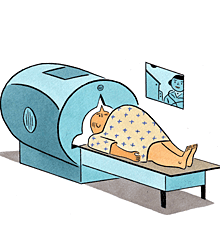
2. Engaging care delivery. Involving consumers in the care-delivery process will require the development of tools and programs that give people incentives to pursue healthier lifestyles and participate more actively in the medical treatment they receive, and enable a new clinical operating paradigm that coordinates care around the patient.
Consider the advent of healthcare bundles. As more and more bundles appear on the market, their cost and quality will become more transparent, enabling consumers to easily shop for them. In turn, this will encourage competition among the providers that offer bundles. In a Booz & Company survey of roughly 1,000 U.S. healthcare consumers in October 2012, 78 percent of respondents found the concept of bundled care appealing. Among the benefits they would expect to reap from care bundles are lower prices, greater price clarity and transparency, more integrated care, the ability to provide input in care processes, and simplified billing.
Healthcare bundles are starting to drive costs down by streamlining, standardizing, and coordinating what were formerly discrete and often highly variable processes and procedures, transforming them into comprehensive, patient-centric delivery systems. In October 2012, Wal-Mart Stores Inc. announced agreements with six leading hospital systems, including Cleveland Clinic, Geisinger Health System, and Mayo Clinic, for exclusive, fixed-price care bundles for certain heart, spine, and transplant surgeries. This enables the company to provide incentives to employees who choose one of the six providers. If an employee who requires one of these procedures uses one of the fixed-price bundle providers, the employee’s out-of-pocket expenses are eliminated and other expenses related to receiving the care, such as travel, lodging, and food for the patient and a caregiver, are provided without charge.
As Walmart’s agreements suggest, employers can play a valuable role in encouraging consumer engagement. Whole Foods Market, which provides its own health insurance to its employees, is using several programs to build healthy lifestyles into its corporate culture. In CEO John Mackey’s new book, Conscious Capitalism: Liberating the Heroic Spirit of Business (with Raj Sisodia, Harvard Business Review Press, 2013), Mackey describes Whole Foods’ Team Member Healthy Discount Incentive Program. It is a voluntary program in which employees can go to a mobile lab that will measure basic biometrics, such as cholesterol levels, body mass index, and blood pressure. The healthier the employee, the higher Whole Foods will raise his or her store discount above the standard 10 percent. At the highest level, employees can obtain a 30 percent discount. “Within our culture,” writes Mackey, “it has become a matter of pride for team members to move up to higher levels.”
Whole Foods has also established the Total Health Immersion Program for its least healthy and most at-risk employees. This one-week, medically supervised program provides education about healthy eating and living. Mackey reports that more than 1,300 employees took advantage of the program in its first two years, prompting the company to extend the program to spouses and partners. In 2013, Whole Foods plans to begin offering the program to the public. “It’s a win-win strategy for all stakeholders involved,” Mackey told us. “When we have healthy team members, they are happier, and happy team members provide better customer service to our shoppers. It also leads to the company needing to spend less on healthcare, which is better for investors.”
Consumer engagement is also an area where pharmaceutical companies can make an impact. For example, Biogen Idec and Merck Serono have been making impressive improvements in the treatment of multiple sclerosis. Using Web-based engagement tools and patient services that add “beyond-the-pill” value, they show consumers how their behavior can maximize the effectiveness of therapies.
These consumerization pioneers are not seeking to change the behaviors of one patient at a time. Instead, they are integrating behavioral cues into a coherent therapeutic system that reinforces medical management and improves outcomes. To achieve truly engaging delivery, care will have to be coordinated among consumers, care providers, and insurers. Simplified and transparent pricing strategies will be needed to help consumers make more informed decisions. Tools and programs will be needed to help them participate in their own care. And, of course, the technology infrastructure, analytics, and devices that help them fully engage will need to be ubiquitous within healthcare systems.
3. Compelling end-to-end customer experiences. In healthcare today, customer experiences tend to be passive and fragmented, as the consumer is passed from department to department and care provider to care provider. Thus, the quality of the customer experience can vary widely by touch point, and there is often little or no coordination among the many touch points in the end-to-end process of purchasing insurance or receiving care. Unsurprisingly, this results in low levels of customer satisfaction, trust, and brand loyalty. According to the American Customer Satisfaction Index, an independent national benchmark based on surveys of more than 70,000 people, U.S. consumers rank hospitals low, just above the U.S. Postal Service in terms of customer satisfaction. They rank health insurers lower yet, in the company of utilities and wireless service providers.
In the health insurance sector, creating compelling customer experiences that bolster satisfaction, trust, and brand loyalty will require more personalized approaches to selecting products, more transparent and comprehensible plan options and costs, and less onerous enrollment processes. Once customers sign on, plans need to support them in the quest to manage their own health through simplified claims processes and less complex billing.
In 2011, Cigna launched its largest brand campaign to date, “Go You,” a $25 million marketing effort designed to attract consumers with a more personalized customer experience. Go You is more than an ad campaign. Cigna is supporting it with 24/7 worldwide customer service; a Web portal; social media apps; tools, such as Intuit Inc.’s Quicken Health Expense Tracker, that help plan members better manage their medical care and costs; and mobile applications that help members locate nearby pharmacies and emergency rooms. Plan members are also provided access to health coaches for chronic conditions and wellness programs.
Hospitals have been on the forefront of the effort to create more compelling customer experiences. Many have sent teams to companies that are known for the world-class customer experiences they provide, such as Walt Disney Company and the Ritz-Carlton hotel chain, to become more adept at serving customers. One result is the addition of experiential elements such as valet services, streamlined admissions processes, more family-friendly policies, and the redesign of facilities to build in directional cues and create calmer, more attractive settings.
Of course, before a customer experience can be improved, it must be understood. This starts with a mapping of the current customer experience and a clear understanding of how consumers interact with the brand. Highmark, for example, used a variety of techniques and tools—including research, site visits, consumer interviews, consumer experience simulations, ethnography, and operational data—to understand how consumers perceived their experience with the company. Health organizations must then develop the skills and tools needed to enhance touch points and deliver information in ways that are accessible to consumers.
Enabled by Technology
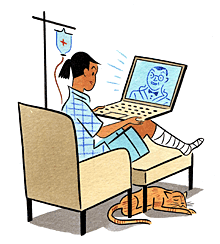
The common thread in nearly all consumer-driven healthcare initiatives is digitization. “Big data” and new technologies will enable organizations to adopt new products and services by simultaneously supporting personalization, superior clinical outcomes, and affordability. Although some technologies have yet to be widely adopted in healthcare, companies are already using new platforms to engage with consumers.
Healthcare companies have access to untold amounts of clinical and financial data. But to make it actionable, they need to convert this data into readily understandable information. When this information is made available and accessible to the consumer through personalized channels, it will affect their behavior—whether the information is a treatment reminder, a lifestyle suggestion, or direction to an optimal site of care. Some healthcare payors are now using the insights gleaned from data to create products and services that align their benefit structure with the individual’s needs. For example, Bloom Health, a Minnesota-based private health insurance exchange, uses big data and analytics to transfer decisions about health benefits from employers to employees. Its website includes a decision engine that asks employees a series of questions aimed at guiding them to the policy that best fits their needs, financial situation, and risk tolerance. In 2011, a trio of large insurers—WellPoint, Blue Cross Blue Shield of Michigan, and the Health Care Service Corporation—purchased a 78 percent stake in the company. The rationale: They wanted to learn how to better develop and market benefit plans that would appeal to consumers.
Cloud computing will be another key technological enabler of consumerization, providing, for example, the platform for long-overdue interoperable electronic health records that can provide seamless transitions for patients and better clinical decision support for physicians. Nimbus Health, a Seattle-based startup, is using Amazon’s cloud services as a host for its Breeze Medical System, software that allows doctors to share medical records with other doctors and patients. Of course, any mention of cloud computing may raise concerns about privacy among consumers, especially when it comes to their medical history. Although industry security standards have made considerable headway, hospitals and other care providers will need to manage security requirements and risk carefully.
Telemedicine—remote monitoring and diagnosis—is a third enabler of consumer-centric healthcare. It promises improved access and lower care-delivery costs. After a successful pilot project with 6,000 patients in 2011, U.K. health minister Jeremy Hunt announced plans to deliver remote care to 100,000 chronically ill patients in 2013, and as many as 3 million patients by 2017. Patient conditions are monitored with remote devices, and patients who have health concerns can text their doctors instead of making appointments and traveling to see them.
Finally, given their ability to engage people, it should come as no surprise that mobile health (m-health) and social media can support the transition to consumerization. During epidemics in the United States, the Centers for Disease Control and Prevention (CDC) has been a leader in using social media, such as Twitter, Facebook, and Wikipedia, to distribute information to the public across multiple channels, including smartphones. During the 2009 H1N1 swine flu pandemic, for example, the CDC used social media channels to disseminate information on behaviors for avoiding H1N1 and to teach people how to recognize its symptoms. The CDC is also tapping into the power of crowds to encourage people to become “health advocates” who pass health information through their own networks. It is expected that m-health and social media use among healthcare companies will increase, engaging consumers more in their own health and wellness. For example, they could use their smartphone to monitor prescriptions, track weight maintenance, and get medical appointment reminders.
The digital tools are available and accessible, and organizations such as the National eHealth Collaborative (NeHC) are devising strategies and standards for integrating them into the U.S. healthcare landscape. The NeHC has mapped out a five-phase framework for guiding the development of the technological infrastructure that the industry will need to support consumer-centric healthcare. It suggests how the digital components of healthcare may come together in the coming years (see “The Patient Engagement Framework”).
The Path to Consumerization
As consumer-driven healthcare spreads, the fundamental nature of the industry will change—just as in other industries that have moved from B2B to B2C, such as banking and computers and electronics. The ultimate goal for insurers, care providers, and pharma companies alike is to drive initiatives forward until the industry reaches a tipping point. The new healthcare industry that results will be adept at influencing consumer behaviors. It will use sophisticated attitudinal segmentation to design and deliver personalized products and services, and its financial performance will be linked directly to care outcomes. Such an industry will motivate consumers to pursue wellness, and will provide them with access to healthcare when they need it via the channels that they prefer.
Of course, this vision will not materialize overnight. It will take years, perhaps decades. And it will require a sustained effort across the healthcare industry, investment, and the willingness and ability to change. But healthcare companies around the world are realizing that their current business models are insufficient to meet today’s challenges. As Aetna CEO Mark Bertolini told the participants at the HIMSS Conference in Las Vegas in 2012, “The end of insurance companies, the way we’ve run the business in the past, is here.” Consumerization is the industry’s future. The work will be hard, but the rewards promise to far exceed the effort: a high-quality, cost-effective, and user-friendly system that continuously improves population health. 
The Patient Engagement Framework
In November 2012, the National eHealth Collaborative, a public–private partnership, developed a five-phase road map for the digitization of healthcare. It begins with “Inform Me,” an initial step during which consumers are provided with standardized forms and information about advanced directives, privacy, and specific conditions. The second step, “Engage Me,” provides patients with access to their electronic health records, fitness trackers, and other e-health tools. The third step, “Empower Me,” includes secure messaging between patients and care providers; the integration of patients’ personal data, such as genetic, behavioral, and medical history information, into the providers’ electronic records; and patient access to the quality, safety, and experience ratings of care providers.
Next, during the “Partner with Me” step, the penultimate phase of engagement, patients are given condition-specific management tools and access to care summaries to support their personal health maintenance efforts. Also, patient-generated information, such as personal preferences and wellness and home health device data, is added to their electronic health records. In the road map’s most advanced and final phase, “Support My e-Community,” patient engagement is enhanced with a fully interoperable platform that supports seamless information sharing between a patient and the entire care team.
Today, various players are at different stages of the road map, though most have yet to move beyond “Empower Me.” As companies continue the evolution, they will not only optimize individual outcomes, but also enhance health through the analysis of data and the identification and dissemination of best practices.
Reprint No. 00167
Author profiles:
- Gil Irwin is a senior partner with Booz & Company based in New York. He specializes in business model and operating model transformations in the healthcare industry, with a focus on technology and operations strategy.
- Jack Topdjian is a partner with Booz & Company based in New York. He leads the firm’s North American healthcare technology and operations practice and global healthcare consumerization practice. He specializes in large-scale transformation and capability building in the healthcare industry.
- Ashish Kaura is a partner with Booz & Company based in Chicago. He specializes in the development of growth strategies and new business models in response to market discontinuities for healthcare and health-services companies.
- Also contributing to this article were Booz & Company senior partner Gary Ahlquist, partner Michael Ruhl, and senior associate Nate Holobinko.
