

FedEx Delivers on the Deal
In acquiring Kinko’s, FedEx is testing its own mastery of the art of integrating new companies.
(originally published by Booz & Company)
 |
|
Illustration by Vern Evans |
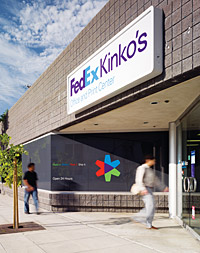
FedEx had just acquired Kinko’s with the stated purpose of fueling its retail outlet expansion and driving growth of its transportation services. The combination “leverages the historical strengths of both companies, while powerfully redefining the future of the business services marketplace,” Mr. Smith explained to the group. Kinko’s would give FedEx access to those individuals and businesses lacking a regular pickup from a FedEx driver. FedEx would gain access to the copy chain’s mainstay — the high-margin, small and medium-sized businesses that FedEx had long coveted but could not reach. With Kinko’s as the front end, Mr. Smith could plug in FedEx’s massive back end and go after every business customer on the planet, large and small.
That’s the near-term plan, but as Mr. Smith’s message to the Kinko’s troops suggests, his vision for FedEx never ends with the near term. Although Mr. Smith and FedEx won’t confirm or deny (he was unable to speak to strategy+business for this article), it’s clear that FedEx Kinko’s can be much more than a copying and delivery service. Given its expanding web of storefronts linked by a super-high-speed digital network, FedEx Kinko’s is perfectly situated to take advantage of the rapidly developing 3D printing technologies that can already produce all sorts of small products. FedEx Kinko’s could become the pickup point for anything from print-on-demand books to parts for automotive engines and electronics. It’s the logical step for a company whose core business is getting stuff from here to there.
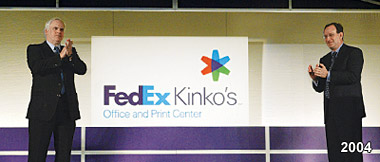
All in good time, but Mr. Smith’s first order of business when FedEx closed the Kinko’s deal was to convince the crowd staring him down in the Westin ballroom to come on board with him. Sitting in the front row that day, Tom Leverton, then a Kinko’s vice president, remembers how Mr. Smith and Kinko’s CEO at the time, Gary Kusin, stood side by side beneath digitally projected images of the two companies’ logos. “Today we move forward by unveiling a new brand,” said Mr. Kusin, who before coming to Kinko’s in 2001 had done stints as CEO of a cosmetics company, a software retailer, and HQ Global Workplaces. Then in a bit of corporate theater, the lights went down and the logos slid together to reveal the newly combined FedEx Kinko’s brand, as Mr. Smith, standing below the merging logos, draped his arm around Mr. Kusin’s shoulder. Mr. Leverton, who worked on the rebranding implementation and who is now senior vice president of products and services for FedEx Kinko’s, turned around in his seat to watch the reaction. There was a pause while people soaked in the message — Kinko’s would not be gutted as they had feared — and then the hall erupted in raucous clapping and relieved smiles, the biggest among them Mr. Leverton’s. “Once I heard it, I knew this merger was going to work,” he says. “We had the hard-core team members behind us, and without their support, no amount of planning at the top would make up for that.”
Hearts and Minds
Acquisitive CEOs, similar to conquering generals, have two avenues open to them once the dust of negotiation has settled. Mr. Smith, a former Marine Corps pilot and military history student, is familiar with both. One tactic is to bury all residue of the preacquisition organization; Oracle chief Larry Ellison and Mussolini exemplify this approach. The Ellison/Il Duce method results in mass layoffs and complete management turnover. The other approach is one that Alexander the Great favored. Don’t cut off the heads of the chieftains and soldiers you’ve just beaten; instead, bring them into the fold and give them the authority to govern. Then sit back and watch the empire grow.
Fred Smith was pulling an Alexander the Great. To be sure, Mr. Kusin himself resigned in early 2006, and most of the senior executives ended up leaving after the acquisition closed, but most managers from Kinko’s found a lasting place in the new organization. That was a necessity: If FedEx wanted to build on Kinko’s strength with small and medium-sized businesses, it needed to embrace Kinko’s friendly, well-known brand and the people who had fostered it. And although the hard work of integrating the two companies still lay ahead, Mr. Smith and his team were primed to pull that off. After all, they had been shepherding companies through the integration process since their first major acquisition, in 1984.
In a world where most corporate acquisitions are exceptionally painful, and 50 to 80 percent fail, FedEx has come as close as any company to making the undertaking as efficient and successful — even happy — as possible. In nearly a dozen acquisitions since the mid-1980s involving tens of thousands of employees across the globe, Mr. Smith and his team have honed a process for subsuming companies under the FedEx banner with relative ease and using them to open new fronts for the business to grow. That process combines military precision in implementation with unwavering attention to the softer work of winning the hearts and minds of the newly acquired organization.
“Nobody does it better,” says Art Hatfield, senior transportation analyst at Morgan Keegan & Company, an investment bank in Memphis, Tenn., where FedEx is based. “When FedEx acquires a company, they are very good at figuring out what made that company successful and they leave that alone.” Integration at FedEx involves a much lighter touch than at many other large companies. Fred Smith and his team try to strike a balance between transforming the company they just bought into a FedEx company, with the same drive for efficiency and reliability, and retaining the qualities that made the target company worth buying in the first place. “They also find out what has prevented that company from getting to the next stage, and they bring in the resources to make it happen,” Mr. Hatfield says.
The FedEx way of integration has proved itself over the years. The 1998 acquisition of Caliber System Inc. is just one example. Its subsidiary, the less-than-truckload carrier Viking Freight, formed the basis for FedEx Freight; that business now runs out of Memphis with former Viking CEO Douglas Duncan heading the operating company, which grew revenue an impressive 14 percent on operating margins of 14.5 percent in 2005. Roadway Package System (RPS), another Caliber company, became FedEx Ground, which is still based in Pittsburgh and was run until recently by the same person who made RPS a winner. Today, FedEx Ground is an unquestioned success, with revenue growth of 11 percent and profit margins of 12.5 percent in 2005 — far outpacing competitors.
But Caliber and every other major acquisition, with the exception of Kinko’s, all built on FedEx’s transportation business. Because of similarities, it has been relatively easy to bolt the acquired companies onto the FedEx corporate structure and give them the benefits of FedEx’s highly praised logistics, human resources, marketing, and sales expertise. Kinko’s wasn’t in the transportation business, and photocopying is a very different business logistically. If the other companies FedEx bought in the past fit like pieces from the same puzzle, the Kinko’s piece came from an entirely different puzzle; it presented an unprecedented challenge to FedEx’s well-honed process for smoothly melding companies into an ever-growing operation.
The FedEx team didn’t want to lose Kinko’s close connection to smaller businesses, but they did want to position the company for growth. In recent years, Kinko’s had been focused on controlling costs and raising margins rather than on expansion. FedEx wanted to encourage that discipline, but it also wanted to prep the chain for a surge of expansion around the world. Now Mr. Smith and his team had to figure out how to put it all together profitably.
Making the Match
Kinko’s had been in play for several years before FedEx stepped in and announced in December 2003 that it was buying the copy chain. Founded in 1970 in Santa Barbara by Paul Orfalea, the famously curly-headed entrepreneur (thus the name Kinko’s), the chain began with a single photocopy machine in a 100-square-foot shop next to the University of California, Santa Barbara, campus. At the time FedEx stepped in with its checkbook, Kinko’s had grown to 1,200 stores around the world connected by a fast digital network.
Mr. Orfalea valued entrepreneurialism in his executives. He encouraged store managers and franchisees to try new approaches, to tweak pricing and services to find the best mix for their particular customers. That approach worked for more than 20 years as Kinko’s established itself as the largest player in the retail photocopying business.
In 1996, the private equity group Clayton, Dubilier & Rice (CD&R), whose investments range from car rental company Hertz to printer manufacturer Lexmark and arms maker Remington, started investing in Kinko’s and eventually gained control of about 75 percent of the company. Then CD&R quickly began rolling up more than 125 separate corporations that owned and managed Kinko’s stores into one single organization. At the same time, it accelerated the push to expand Kinko’s customer base beyond the core academic crowd into commercial accounts and the growing population of mobile workers. The customers’ needs shifted from do-it-yourself copying and classroom text duplication to more complex and much larger jobs printing materials for marketing and other corporate functions. Selling to these customers required not only different kinds of services, but a more consistent, and more sophisticated, business approach. Each store, for example, could no longer set its own prices and services.
“They wanted to bring uniformity to the operation,” says Enrique Ramirez, managing director of strategy and operations growth at FedEx Kinko’s, who held the same position at Kinko’s in the CD&R era. To meet this new goal, Kinko’s deployed centralized budgeting, financial planning, procurement, real estate, and IT. The IT part was especially critical as Kinko’s began to build out a digital network to connect all its stores.
The next transformation — and the final break from the Orfalea era — happened in 2001, when newly installed CEO Gary Kusin packed up the Kinko’s main office and moved it from the beach town of Ventura, just north of Los Angeles, to Dallas. Until Mr. Kusin took the reins, Kinko’s profit margins never met expectations. “To change a corporate culture, you have to get people out of their routines,” Mr. Kusin told a gathering at the University of Texas McCombs School of Business in 2003. “One of the easiest ways to do that is to move headquarters.” It worked; few Kinko’s managers chose to transfer to Dallas from Ventura, where workers often went surfing during their lunch breaks. Mr. Kusin thus armed himself with a new senior management staff and a mission to get the financially flagging Kinko’s ready for an IPO or a sale.
Over the next three years, Mr. Kusin and his team kept a tight rein on spending, while still serving the expanding needs of a growing list of corporate clients. In 2002, Kinko’s showed a small profit on about $2 billion in revenue. Perhaps even more attractive to potential buyers and the public markets was that operating margins at Kinko’s were finally moving in the right direction, hovering close to 8 percent by the end of 2003, up from around 3 percent in 2001, when Mr. Kusin took the reins. Mr. Kusin’s fiscal discipline had turned heads in Memphis, and in late 2003, Fred Smith stepped up and announced FedEx wanted to pay $2.4 billion to buy the company.
What he didn’t say at the time of the purchase, but would later say privately, was that the Kinko’s purchase answered a challenge from United Parcel Service Inc. Two years earlier, FedEx’s biggest competitor had made a similar move and paid $180 million to buy Mail Boxes Etc., some 4,300 franchised stores, most of which were rebranded as UPS Stores after the acquisition. “We took a look at Mail Boxes Etc.,” says Brian Philips, now COO of FedEx Kinko’s and a 12-year veteran of FedEx. “We didn’t want to get into the franchise business, so we passed.” FedEx wanted it all: the copying business, the real estate, and the 20,000 employees. That was why Mr. Smith declared it “a match made in business heaven.”
If it was, there were skeptics, including Moody’s Investors Service, which placed FedEx’s ratings on review for a possible downgrade because of the strain on the company from the all-cash purchase. And there was the larger question of what a transportation company was doing getting into the retail copy business. Wall Street knocked $1.50 off the share price of FedEx the day after Mr. Smith announced the purchase.
Putting It Together
If Wall Street was initially nonplussed, the employees at Kinko’s were not. FedEx already had drop boxes and even full-blown shipping counters in 134 Kinko’s stores. These included some of FedEx’s highest-performing outlets. “We had already been working with FedEx for 15 years,” says Sally Mainprize, a senior manager with Kinko’s during its CD&R period and now director of commercial marketing and strategy at FedEx Kinko’s. “It made perfect sense to us, and it also made it a more comfortable transition; they were already our partner.”
Also comforting was the knowledge that Kinko’s wasn’t being absorbed by a competitor, which would then institute the usual merger “efficiencies” that do away with redundant departments and employees. Practically everyone could keep their job. And besides, this was FedEx, a company admired universally for its customer service, great technology, and flawless execution. The company is routinely listed among the best places to work and has shown phenomenal growth year after year. Who wouldn’t want to join Fred Smith’s operation? As Ms. Mainprize says, “Everyone was very excited to go work there.”
While the lawyers and bankers were merging the two companies legally, FedEx’s team was preparing to do so practically; a definitive plan was in place before the two sides were allowed to talk to each other. On the day the deal was finalized in February 2004, the integration team was ready to parachute into Kinko’s Dallas headquarters. The initial goal was to have all 1,200 Kinko’s stores rebranded and 20,000 employees retrained, so that every FedEx Kinko’s could open its doors with shipping services by May 24 — dubbed “Day One” by the integration team. On “Day Two,” October 4, they would add packing services — something new to FedEx — all leading up to the peak holiday season when shipping volumes can quadruple.
FedEx has built its business on getting things done quickly, enabled in large part by the company’s military-like management structure. A group at the top oversees strategy, and eight operating companies (FedEx Express, FedEx Ground, FedEx Freight, FedEx Custom Critical, FedEx Trade Networks, FedEx Supply Chain Services, FedEx Services, and now FedEx Kinko’s Office and Print Services) pull it off. That arrangement allows this huge company — 260,000 employees in more than 3,000 offices covering 220 countries — to move with agility.
Most mergers get bogged down by an inability to make decisions; while newly wed companies are dickering over product lines and staffing levels, their competition can clean their clock. FedEx avoids that kind of failure with a clear chain of command that is structured to take in new companies without losing a step. At the top sits a strategic management committee made up of Mr. Smith, the CEOs from the major operating companies, and senior executives from FedEx corporate. They meet every Friday in Memphis without fail to discuss strategy and execution. If an issue can’t be resolved at the operating company level, give the executive committee a week and they’ll give you a decision.
Mr. Smith has often declared that you can build a successful company only if you continually adjust to the shifting marketplace. “Engage in constant change,” he told Fortune Small Business in 2002. “Every business is in the process of being commoditized. The question you have to ask yourself is, What do I have to change to avoid being commoditized?” Trucks delivering documents is not a business that can be sustained at premium prices indefinitely in an electronic age. Although Mr. Smith has not said as much out loud, he no doubt recognizes it. But change makes employees wonder what will happen to their job, and Mr. Smith recognizes that too. Clear and constant communication, he has said, is the only way to get employees to view change as an opportunity.
When FedEx bought RPS in 1998 and got into the ground shipping business, Mr. Smith talked himself hoarse to drive home to RPS and FedEx employees that their jobs were safe, and to explain why ground shipment was a sensible complement to the air delivery service. He did the same during the Kinko’s acquisition, spending weeks explaining why FedEx wanted to be in the retail photocopying business. “If you can put that into a culture that knows change is inevitable and an opportunity, not a threat,” Mr. Smith told Fortune in 2004, not long after the Kinko’s acquisition, “then I think you have the potential to have a company that can grow to a very large size.”
The first step in the FedEx way of integration is to clear the decks. Although it was only a $2 billion piece of a $29 billion company, the Kinko’s integration was designated the top priority throughout FedEx. The message came down straight from Mr. Smith and the strategic management committee, and served to brush aside any bureaucratic hurdles. That priority was reinforced by appointing three members to the strategic management committee: Gary Kusin, executive vice president of market development/corporate communications, FedEx Kinko’s; T. Michael Glenn, CEO of FedEx Services; and Robert B. Carter, executive vice president and CIO of FedEx. The triumvirate had the ultimate say on integration matters and, every Friday, the ear of Fred Smith.
The next step is to break down every activity into a work stream. Work streams for Kinko’s included rebranding, marketing, training and hiring, sales, sourcing, technology, and the physical build-out of stores. Each work stream was co-led by a Kinko’s staffer and a counterpart from FedEx, who together assembled a subteam. Like the military, FedEx spends a lot of time defining goals and making sure they are absorbed by the staff. Nobody starts moving until everybody understands what they need to accomplish and by when.
The FedEx Kinko’s subteams met with the integration committee every week leading up to Day One, usually from 8 a.m. to noon, alternating from week to week between Kinko’s Dallas headquarters and FedEx headquarters in Memphis. “You weren’t going in there to tell the committee everything you were doing,” says Brian Philips, the FedEx Kinko’s COO who as FedEx’s vice president of marketing led the rebranding team from the FedEx side. “Subteam leaders had to come in and say, ‘Here are the decisions I made this week. Here are the things I need from the committee, and here’s what I am going to do between now and next week.’” FedEx has used the same procedure in every major acquisition and integration.
Leading up to Day One, the teams focused on hiring and training staff for the new FedEx Kinko’s stores. The training effort required some 700,000 hours of education for 18,000 FedEx Kinko’s employees. Store managers selected senior Kinko’s team members to take on the new shipping functions, while new hires took over the simpler entry-level positions in the document and print side of the business.
Day One and Day Two came and went without incident; the new FedEx Kinko’s teams had met their goals. Past Day Two, the steering committee scaled back the weekly meetings to once a month to deal with lingering issues, such as unfinished rebranding work. Once the newly merged organization had passed its greatest test — the peak holiday season — with flying colors, there was one final matter to confront. The integration team had to shut down almost 180 FedEx-branded World Service Centers, as their staffed retail outlets were known, where there was overlap with new FedEx Kinko’s branches and redirect all the customers to the new stores.
To pull that off smoothly, the marketing work stream developed in-store advertising to explain the shift to FedEx Kinko’s. They then sent messages to all affected World Service Center customers telling them which of the nearby FedEx Kinko’s stores would now service their account. With that completed, the integration team shut down. It had taken less than a year.
The jury is still out, however, on the results of the integration. Accustomed to seeing nearly immediate bottom-line results from almost every prior FedEx acquisition, Wall Street is not satisfied with the performance of FedEx Kinko’s. Operating margins have fallen from about 7.5 percent at the time of the acquisition to 4.8 percent in recent quarters. FedEx blames those results partly on integration costs, including rebranding and installing shipping services in all the stores. But overall revenue growth at FedEx Kinko’s was just 1 percent in 2005. “It’s not bringing them anything yet,” says Jim Corridore, a transportation equity analyst with Standard & Poor’s. “It’s far too early to say it’s a disaster, but it is presenting some challenges.”
Mr. Philips says he’s happy with the results of the integration so far, but he stresses that it is only a start. The next stage will involve adding 3,000 new FedEx Kinko’s outlets globally. “The beginning was all about the basics,” he says, “but the integration needs to go further from a customer perspective. The next step is to target small businesses, large businesses, and consumers with customized bundles of offerings.” That, he says, would enable FedEx Kinko’s to finally capitalize on the goal of serving just about any kind of customer and boost its revenues.
Beyond Shipping and Copying
FedEx will certainly continue to expand and, per Fred Smith’s commitment, change. It is experimenting with different store sizes and product offerings to meet the needs of customers in more suburban settings, recently introducing a series of compact stores at strip malls located near residential areas.
If Peter Drucker’s “knowledge worker” trend is correct, and evidence suggests it is, the number of people working outside the support structures that a company and an office can provide will just keep growing. But no matter how connected via electronic communications, people still like face-to-face contact. There is no reason to think that FedEx Kinko’s couldn’t become the social and professional gathering place for the kind of work force that Mr. Drucker describes. Kinko’s, after all, pioneered the office-away-from-home concept, and built an infrastructure that can sustain decentralized businesses. Now FedEx Kinko’s executives are working on such on-site offerings as direct mail, office products, and e-commerce solutions — all on a contract basis for individuals or for groups of mobile workers.
And FedEx Kinko’s could grow in another direction, exploiting the power of next-generation printers to deliver everything from books to engine parts on demand. Next-generation digital offset printers will make it cheap enough to print entire books on demand. And 3D printers can already “print” items in materials ranging from plastics to metal. Customers could order goods online, or create something themselves using computer-assisted design programs, and either pick up the item at the nearest FedEx Kinko’s or have it delivered. The company could emerge as the circulatory system for just about any transmission of data in the retail environment, whether that data ends up on a computer screen, on the page, or as an object. It’s a different form of delivery, but it’s still true to FedEx’s mission.
“We know that Fred Smith is always going to be a heat seeker for new technology,” says Paul Saffo, a director at the Institute for the Future in Palo Alto, Calif. “Is he going to build a network of 3D printers? Absolutely. I am sure you will see a steady stream at FedEx Kinko’s of those gizmos that everyone wants, but that are too expensive for a home or small business. But more importantly, the stores can act as a physical point of presence for cyberspace. I am holding my breath waiting for things like this to start, and Fred Smith is the logical guy to make it happen.”
But FedEx Kinko’s still has some work to do to improve its current offering. FedEx has long been known for its superior customer service, but Kinko’s has not. How can FedEx Kinko’s raise its employees’ game without alienating them and, in the process, losing the company’s tight relationship with small and medium-sized business customers? Where FedEx can bring its expertise to bear, and where the integration is headed next, is developing within FedEx Kinko’s employees that same day-in and day-out high level of execution and commitment to excellence for which FedEx is known.
“At the rest of FedEx’s operating companies you’ve got 240,000 employees, many of whom are part-time, doing this thing that people could do in a very mediocre way but they don’t. Compare FedEx to the U.S. Post Office,” says James Wetherbe, Stevenson Professor of Information Technology at Texas Tech University and author of The World on Time: The 11 Management Principles That Made FedEx an Overnight Sensation. “It’s the same type of work, but Fred Smith is able to get this extraordinary loyalty and performance from his work force. You will never have great customer service unless you have great employees. That’s what FedEx does well, but it takes some time.”
Recent leadership changes suggest that those changes are coming. In January, Gary Kusin, the man who led Kinko’s through the acquisition, resigned as CEO of FedEx Kinko’s with no real explanation from FedEx. Drooping margins certainly played into his departure, says Satish Jindel, a transportation logistics consultant based in Pittsburgh who advised FedEx on the purchase of RPS. “The prior management leadership was more focused on generating shipping revenue by selling other things, like janitorial supplies, through FedEx Kinko’s outlets rather than putting more document shipping on the network,” he says. “They lost their focus.”
Whatever the reasons for Mr. Kusin’s departure, FedEx capitalized on the opportunity by bringing in two FedEx veterans, Ken May as CEO and Brian Philips as COO, to push the company to a higher level of execution and service that will in turn drive revenue growth.
“FedEx has patience with its investments,” Mr. Jindel says. Indeed, Fred Smith’s patience has confounded many over the years. When he bought the air cargo carrier Flying Tigers in 1989 for $880 million, naysayers, especially on Wall Street, said he was throwing his money away. The investment eventually paid off fantastically. Mr. Smith was again dinged for building on his less-than-truckload business (which he had gotten into with the 1998 purchase of Caliber) when he gambled $1.2 billion to purchase American Freightways in 2001. UPS watched smugly from the sidelines until 2005, when FedEx started to dominate the market. Then UPS paid $1.25 billion in cash for its own piece of the less-than-truckload industry and bought Virginia-based Overnite Corporation.
As with other acquisitions, Fred Smith saw something in Flying Tigers and American Freightways that others didn’t because his point of focus lay far beyond theirs. Mr. Smith doesn’t always get it right when he looks into the future. His expensive and ultimately failed experiment in ZapMail, a dedicated fax network that couldn’t compete in the early 1980s with the new, inexpensive consumer fax machines, is proof. “A guy like Fred Smith doesn’t build a company like FedEx without taking some risks and making some mistakes,” says Mr. Hatfield, the Morgan Keegan analyst, “but clearly the successes far outweigh the failures.”
FedEx Kinko’s is clearly another bet by Mr. Smith on how the future will evolve. He’s already prepared to meet the developing global needs of his customers by accelerating the company’s growth outside the United States.
If, for some reason, the Kinko’s merger does not work out, it won’t be because it wasn’t given a good shot at success. In taking in Kinko’s, FedEx did what FedEx does best: It executed brilliantly on a well-planned strategy. Whether it can now get FedEx Kinko’s to absorb those high standards is still a question, but seasoned observers give Mr. Smith the edge. “Maybe someday it could be a big part of FedEx’s business,” says Mr. Hatfield, “and even though that might be a ways down the road, you can never count Fred Smith out.”
|
22 Years of Growth and Acquisition
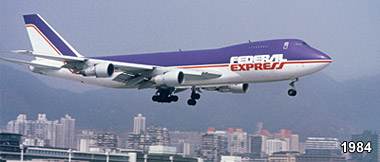
1984 - Federal Express acquires Gelco Express International, a courier services with offices in Europe and Asia, and launches operations in both regions. These become part of FedEx Express.
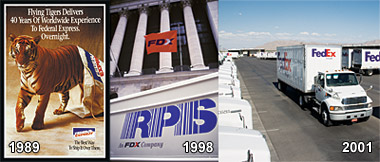
1989 - Federal Express purchases the all-cargo carrier Flying Tigers to expand its presence in Asia. Now part of FedEx Express. 1995 - FedEx acquires air routes from Evergreen International to expand further into China and the rest of Asia. These also become part of FedEx Express. 1998 - FedEx acquires Caliber System Inc., a shipping company consisting of small-package carrier RPS (renamed FedEx Ground); “less-than-truckload” carrier Viking Freight (renamed FedEx Freight); Caliber Logistics and Caliber Technology (combined into FedEx Global Logistics); and Roberts Express (renamed FedEx Custom Critical). The parent company is renamed FDX Corporation. 2000 - FedEx acquires Tower Group International and WorldTariff and combines them to form FedEx Trade Networks. FedEx Custom Critical acquires Passport Transport. Parent company is renamed FedEx Corporation. 2001 - FedEx Corporation acquires American Freightways, which becomes part of FedEx Freight.
2004 - In February, FedEx Corporation finalizes the acquisition of Kinko’s for $2.4 billion. In September, FedEx Corporation acquires Parcel Direct, a parcel consolidator, and later rebrands it FedEx SmartPost.
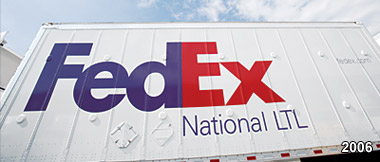
2006 - In May, FedEx Corporation acquires the less-than-truckload operations of Watkins Motor Lines, which becomes FedEx National LTL, a part of FedEx Freight. The FedEx Express unit agrees to buy out DTW Group’s domestic express network in China, along with DTW’s share of a joint venture with FedEx called International Priority Express. |
Reprint No. 06307
Author profile:
Michael Copeland (michael_copeland@business2.com) is a senior writer at Business 2.0 in San Francisco. He received a 2006 Business Journalist of the Year award from the World Leadership Forum.
