
Facing Up to the Demographic Dilemma
At the World Economic Forum’s summer meeting in Dalian, China, four experts discussed the challenges and opportunities that aging populations present to business.
Participants were Yoshito Hori, Jean-Pierre Lehmann, Timothy Ma Kam Wah, and Vanessa Wang; moderated by Rob Norton.
The world is in the midst of an epochal demographic shift that will reshape societies, economies, and markets over the next century. The big news is that the world population, according to United Nations forecasts, will either stabilize or peak around 2050, after growing for centuries at an ever-accelerating rate. The main reason is the decline occurring in birthrates as nations advance economically, and it is already having a significant impact: As birthrates drop and better health care prolongs life spans, the world’s population is aging rapidly. For example, between 1950 and 2000, the percentage of the world population older than 60 rose almost imperceptibly to 10 percent from 8 percent. By 2050, however, that percentage will more than double, to 21 percent. And in many countries — notably Japan and those in western Europe — the share of population age 60-plus will be more than 40 percent by mid-century.

Photo credits: Top row (left to right): 1. © maXximages.com; 2. © Joey Boylan; 3. © Joseph Jean Rolland Dubé; 4. © Martina Ebel; 5. © Lee Pettet; 6. © Claudia Dewald; Middle row (left to right): 1. © Rich Legg; 2. © DigitalSkillet; 3. © Luca di Filippo; 4. © Kevin Russ; 5. © Jordan Chesbrough;
6. © maXximages.com; Bottom row (left to right): 1. © Joris van Caspel; 2. © StylePix; 3. © Cliff Parnell; 4. © Galina Barskaya; 5. © maXximages.com; 6. © Anne Clark
The demographic dynamics in the developing world are radically different. Birthrates are still high, and populations are both growing and becoming younger. Over the next few decades, many of these countries will experience what David Bloom, chair of the department of global health and population at Harvard’s School of Public Health, has called a “demographic dividend”: a rising proportion of young people entering the workforce, driving productivity and economic growth. (See “India’s Demographic Moment,” by Nandan Nilekani, s+b, Autumn 2009.)
There are also anomalies among nations. In the developed world, the United States has many of the same demographic attributes as Japan and Europe, but high rates of immigration are offsetting the trend toward aging. In the developing world, the population of China is destined to begin aging rapidly as the result of the government’s past policies to limit population growth. Today, only 11 percent of the Chinese population is older than 60, but by 2040 the proportion will rise to 28 percent.

Photo credits: Top row (left to right): 1. © maXximages.com; 2. © maXximages.com; 3. © Debenport Photo; 4. © Alexander Raths; 5. © maXximages.com; 6. © maXximages.com; Middle row (left to right):
1. © Alexander Raths; 2. © maXximages.com; 3. © Elena Korenbaum; 4. © Lawrence Atienza;
5. © maXximages.com; 6. © maXximages.com; Bottom row (left to right): 1. © Kevin Russ; 2. © Lev Olkha; 3. © Elliott Kim; 4. © Anne Clark; 5. © Jacob Wackerhausen; 6. © Zhang Bo
These demographic shifts will drive massive change in markets and economies, and will require entirely new approaches on the part of both policymakers and business leaders. But the shifts seem to get less attention than they deserve — largely because they take place over time spans much longer than the political and business cycles that drive most legislative and managerial agendas. To identify some of the most significant challenges that will need to be addressed as populations age, strategy+business teamed with the World Economic Forum to convene a roundtable of notable thought leaders with expertise in Asia. (A subsequent roundtable, also conducted with the forum, will be published in the Summer 2010 issue, addressing the challenges and opportunities presented by rising young workforces in developing nations, especially India.)
The discussion was moderated by s+b Executive Editor Rob Norton and took place on September 12, 2009, at the World Economic Forum’s third Annual Meeting of the New Champions in Dalian, China.
S+B: What would you consider the most significant challenge that political and business leaders face related to aging populations?
HORI: We’re seeing a very big generation gap opening up, between the older people who are enjoying government benefits and the younger generations that are bearing the financial burden. Japan is a rich country, as are many of the other countries where the population is aging, and people today seem to feel we can afford the policies we have; there is no apparent urgent need for policies to change. But people are not aware enough of what’s going to happen in 10 or 15 years’ time. Budgets and resources are limited, and at some point you have to make decisions: Is the priority of the country to care for the elderly or to look to younger generations for innovation? It will be an issue in the future, and there will be a need for much discussion.
LEHMANN: One of the things unique to the period that we’re living in now is that we must think in terms of centuries rather than decades. When people talk about long-term issues like climate change, they often say, “Well, we’re talking about 2100, and that’s so far away.” But life expectancies today often extend to 100 years. When I look at my grandchildren, I realize that they will be around in 2100.
One of the things that concerns me about aging populations is that older people — to make a big generalization — tend to be more self-centered. In Europe, for example, the politics are very short-term, and that’s because politicians know that old-age pensioners vote and have money, whereas young people don’t vote, and in any case don’t have much money. So I would agree, in addition to all the other “divides” we have in this world, such as the North–South divide and the digital divide, there’s also going to be a big generational divide. We are going to need a tremendous number of innovations and creative approaches to address this challenge.
MA: I am concerned that governments, businesses, and people in general are not well prepared to think about the implications of aging societies. I attended the first United Nations Assembly on Ageing in Vienna, in 1982. A lot of topics and issues we’re discussing now had already been brought up, and people were talking about the need for preparation. But 20 years later, at the U.N.’s Second Assembly on Ageing in Madrid, in 2002, the same topics were brought up again, and since then they keep being repeated. Meanwhile, we have continued to see increases in longevity and evidence that populations are aging, and the preparation has still not been done. I feel that we all are not well prepared, not only physically, but psychologically, morally, and spiritually.
WANG: I’ve been involved in a project with the World Economic Forum on the study of demographic shift issues, and the business I run takes me from Japan to India. I’ve seen many different retirement systems and innovative things that governments and industries are doing. I feel the demographic issues today are where climate issues were five or 10 years ago. Everybody had heard about it, but nobody cared. We have seen the risks in the academic studies, and we see the risks in the business environment. But if it doesn’t feel like an opportunity, there’s no urgency. As Mr. Ma said, the topics keep repeating and repeating, but everybody still says we are not ready to address them.
So my thought is that we have to bring focus to this issue — the need for changes in social policy and for innovation in products and services. There is a huge gap in information. My consulting clients want to know what the right measures are. And when people say there are risks, what exactly are they and how can we quantify them? And how does it really translate into the business? There is an unmet need for better information. What is presented often is not at a level that will actually change people’s perceptions and awaken them into action. Better information is the fundamental thing needed to address the demographic risks that we have been discussing over the last few years.
MA: I agree, but prior to defining the target and the focus, I think we also have to tackle the relative issue of how aging is being positioned in the community and in society. In most of society, we define — or some people define — aging as regression, as poor, as noncontributive, as reliance and dependency. I think we need to appeal to the whole world to position aging as a blessing to society, not a problem or a difficulty. After we have set the scene, then we will know how to focus.
LEHMANN: At the risk of being somewhat provocative and controversial, I don’t think that we can say that aging is only a blessing for society. I think it can also be a terrible drain — in the case, for example, of elderly people with Alzheimer’s disease or other forms of deterioration. It depends on the conditions; in some cases it can be a curse. When you look at the proportion of the population of Europe that now is over 65, it is 33 percent, so you’re starting to talk critical mass there. And I think this is going to have all sorts of implications, some positive, but some negative.
MA: I think we also need to focus on those 90 percent [of elders] who are healthy and active, and can live independently and still contribute to their families and to society. It seems that we always misallocate our attention to those who are weak and senile and sick.
HORI: We all pay respect to the elderly, and we want them to live longer and have a happy life and a happy ending as well; we all believe in that. But as the number of elderly people rises in proportion to the number of young people, the question is, Who is going to bear the burden? That, to me, is the real issue — the issue is pensions, health care, the nursing care system — and the implications for business and society.
If you look at Japan, lots of issues are arising as a result of population aging. The pension system and health-care systems are coming under strain, but very few solutions have been put forth. I’ll give you an example of what happens. We know that elderly people require a lot more care from doctors and hospitals than younger people. In Japan, older people are using seven times as much of the budget for health care as younger people are. So the Japanese government proposed health-care reform that would have required people over 75 years of age to bear some portion of their costs. It was vastly rejected by the elderly.
WANG: Again, I think that there is a lack of focus and a lack of data that’s tailored toward solving problems. In the energy sector, there’s a lot of interest right now in the idea of the smart grid, and how it can help tackle our environmental problems. One reason that people are actually interested in developing solutions around the smart grid is that people in that sector are showing detailed data about how much money is being spent on things like resources, transmission lines, and electricity usage, and they can demonstrate the efficiencies that are possible. When we get the kind of information that can show how we can create efficiencies in medicine that could help solve problems related to aging, then people will start to see business opportunities instead of problems. Another example is that when we talk about aging, much of the data is just about people over 65, or over 75. We need to differentiate much further, looking at the needs and resources required by people in their 50s, 60s, 70s, 80s, and 90s. Once you put more information like that behind it, you can describe the issues much more specifically.

Photo credits: Top row (left to right): 1. © Darren Greenwood/maXximages.com; 2. © Scott Griessel/maXximages.com; 3. © Özgür Donmaz; 4. © Hill Street Studios/maXximages.com;
5. © Catherine Yeulet; 6. © Jostein Hauge; Bottom row (left to right): 1. © Rebecca Ellis; 2. © Anne Clark; 3. © Zhang Bo; 4. © Chris Elwell; 5. © Mary Hope; 6. © Nicholas Monu
S+B: As we turn to potential solutions to some of the problems posed by population aging, are there approaches from business that could be helpful?
LEHMANN: We have to explore all sorts of different options. One obvious solution that would be beneficial for both Japan and Europe as they try to deal with aging populations would be to open up the frontiers to migration and allow in younger workers from less-developed countries. Another idea is to encourage elderly people to live elsewhere — it’s something the Japanese tried in the past, but dropped. It was unpopular, but it’s something I’m advocating in Europe. It helps on the pension front. You say, “Look, the bad news is that we have to reduce your pension. The good news is we’re moving you to Libya, where the standard of living is much lower and your pension will go a much longer way.”
HORI: I don’t think those policies are politically practical, and they won’t solve the problem.
LEHMANN: They are certainly not a major part of the solution, but they are ideas that could help, and there may be ways to make them attractive to people. I think the globalization of aging is one of the options that should be explored, even if some of the solutions are difficult or unacceptable for political or other reasons.
MA: One of the problems with focusing on solutions is that as policymakers and businesspeople think about community resources and corporate commercial resources, they currently don’t see the potential market power of the aging population. But when a quarter of the total population in the world is aging, they cannot disregard that. Those people have to be accommodated. I would give one example of ageism in Hong Kong. When you visit the department store, the sales assistants are very welcoming to young women, encouraging them to linger and shop. But they assume that elderly women are not potential customers, and try to make them leave. It’s a totally different attitude and suggests the kinds of cultural shifts that are necessary.
WANG: It’s interesting to think of what the “silver” GDP will be in the future. The more we can quantify the consumption of the elderly, the better we can gain an appreciation of the business they generate, and think of the steps that will stimulate this silver market.
HORI: The Japanese government is taking steps to address these challenges. The new government, the DPJ [the Democratic Party of Japan, which was swept into power in August 2009], will introduce a US$260 allowance per child per month to encourage larger families. Additional child-care services will also be implemented. Although that does not provide a short-term solution or a midterm solution, it will help over time. We’ve seen birthrates increase in some developed countries, such as France. Other partial solutions may include encouraging more women to join the workforce, extending retirement ages, and, as we discussed, encouraging countries to welcome foreign workers.
But when you look at specific issues like our pension system, eventually elderly people are going to have to accept the fact that they will get their pensions later, and those pensions will be smaller. That’s going to be an issue. As we discussed, however, many people are not aware of what’s going to happen in 10 to 15 years’ time, and that there is an urgent need for change.
S+B: What about the skills gaps that we see opening in the developed countries where the aging population is currently rising? The demographic forecasts show that the same kinds of gaps will begin to appear in China a decade or two out. What are the challenges and the opportunities for corporations?
HORI: I think there are two main things. One challenge for corporations is losing a market, which is what you see if you look at Japan. There’s a shortage of children; when you look at primary schools, for example, you just don’t need the number that exist. This is a big burden for companies that are serving the younger-generation market. There has to be a big market shift in terms of the corporate sector.
The second challenge is the workforce, because it is going to shrink as well. How should we incorporate such a decline? There are several dimensions: One is the need to increase productivity through approaches like robotics and IT. The second is migrant and immigrant workers, as we discussed. The third is offshoring, shifting the business to either China or India. So I think this is going to be a major challenge as companies adjust to these shifts.
S+B: Your mention of offshoring raises the question of the degree to which companies are going to be able to do demographic arbitrage — locating their headquarters and production in relation to where they can find an employee base or markets for their goods and services.
WANG: For 90 percent of the companies in these countries, there is a labor force issue. Companies that I consult with are offshoring many, many jobs to China and India because of skills issues and the advantage of the youth dividend there.
One of the main costs of running a business is represented by the cost of fixed salaries, because salaries don’t go backward — they keep going upward; the same is true of health-care premiums and pension costs. It costs companies a lot to hire older employees. So rather than fill their skills gaps locally or by hiring older workers, companies go offshore to solve their problems. And until there are good incentives for them to meet the skills shortages in their own countries, that will continue. In many ways, companies can’t stop what they do; at the end of the day their job is to keep producing more profit. Solving this problem would require innovation in financing pensions and health care so the companies aren’t bearing all the costs, as well as retraining and other issues. It will take a shifting — a redistribution — of social resources.
S+B: Is the challenge in filling skills gaps different for service industries, where the services are provided in the home market and the jobs cannot be outsourced?
HORI: Yes, it is different. In Japan, it’s in these industries where we’ve seen foreign workers come in recent years as the workforce has been aging. Many have lost their jobs or have gone back to their home countries because of the economic downturn, and it’s going to be difficult to attract them again. So there will be some needs in the service sector. But the service sector is also where we’re seeing large productivity increases. Fewer and fewer workers are needed, largely because of the Internet. The volume of sales in e-commerce is going up, and the number of retail shops is going down.
MA: I think there’s another side to that, in that companies could change a lot of their mechanisms and procedures and IT systems to cater more to older employees. There are many ways for workers to deliver services and care from their homes, for example. My organization has 1,000 elderly volunteers who spend every weekday at our call centers or at their own home, calling to check up on and chat with other elderly people — who are waiting for the caring and assurance calls — and they enjoy it. Although ours is a free service, we find that there are many people who, when they are out of town, would like to pay for someone to call their parent, to send them a greeting or birthday wishes, or even to visit and talk with them. I think we could develop job redesign processes to equip elderly people with basic skill sets and some IT technology, to do this kind of work from their homes. It’s one way that we can make the best use of the aging resources and help older people take care of one another.

Photo credits: Top row (left to right): 1. © Thomas Lammeyer; 2. © Hanquan Chen; 3. © Darren Greenwood/maXximages.com; 4. © Yuri Arcurs/maXximages.com; 5. © Lev Olkha; 6. © Nancy Louie
Bottom row (left to right): 1. © DNF-Style Photography; 2. © Scott Griessel/maXximages.com; 3. © Yuri Arcurs/maXximages.com; 4. © YinYang; 5. © Yuri Arcurs/maXximages.com; 6. © James Knighten
S+B: Is there a greater need for coordination among the public, private, and nonprofit sectors?
LEHMANN: I do think there needs to be collaboration, and I think we need to think more about this from a macro perspective. I totally agree that businesses are looking for profits and by definition have to work on a relatively short-term basis. But a group like us should be thinking in terms of advising business on future opportunities. I deal with business intensely; I teach at a business school. I always try to appeal to enlightened self-interest and say to companies, “You should be doing X, Y, Z, not because of the good that it will do to the planet, but because of the benefits it will produce for your managers, shareholders, and other stakeholders.” So if you start with the premise that companies are about profits, you need to push them to think about where the profits are going to be generated, and whether they are going to have the resources to generate them.
When you look at the demographic data, the bottom line is that on the one hand, you have the problem of aging populations, mostly in the developed world. On the other hand, you have the problem of an enormous population explosion taking place among the poor countries of the world.
The biggest demographic increase is going to be in Africa. By 2050, roughly 20 percent of the world population is going to be in Africa, up from 9 percent in 1900. The same is true in parts of Asia and the Middle East. Just in the next decade, the youth dividend will be adding 250 million people in Central and South Asia, 9 million in Iraq, 9 million in Iran, 10 million in Afghanistan, 38 million in Pakistan — you’re going to be adding a population in that country alone half as big as Germany’s. The population of Yemen is going to increase from 17 million today to 39 million in 2025.
This is the kind of thing that we need to talk to companies about. If you ask them, “Where are your computer engineers tomorrow?” they say, “Well, in China.” Well, they won’t be in China, or in Singapore. Your future computer engineers — your future workforce — has to come from Yemen, from Nigeria, from Pakistan. We need to think about how we are going to get people who will have the necessary skills. We know the people will be there. But in many cases, they will be uneducated and possibly lacking the right motivation.
S+B: Could we envision corporations in developed countries founding schools in the Yemens and the Pakistans of the world and then building plants there or relocating or importing the workers?
LEHMANN: I think those are the kinds of things that will be needed. I believe all of us — corporations, business consultants, and business schools — have gone off on a very wrong track with corporate social responsibility. It is where issues like this were relegated, and it was a concept that was dead on delivery, because it became a kind of feel-good activity that the CEO could talk about and for which he or she could get an award for citizenship.
What must be done is to integrate issues like demographic change into the mainstream of the corporate strategy. And here’s where I think one needs to look at cases. I’ll give you just one case, but I could give you a number. I am acquainted with an Indian entrepreneur named Rajendra Pawar, who is cofounder of a very successful software company called NIIT Ltd., and a friend of the [World Economic] Forum. NIIT is a pioneer in education-oriented technology. It developed a concept, which you may be familiar with, called Hole-in-the-Wall, which places free computers in public locations for kids in slums and in poor villages. It’s called Hole-in-the-Wall because, literally, they take a wall and put computers in there. These kids, some of whom have probably never seen a blackboard, gain computer literacy by teaching themselves simply through the availability of the computers. It’s a fantastic social experiment.
It is free — so there are no profits in the conventional sense. If you ask Raji Pawar why he’s doing this, of course there is an element of altruism, because he is a very humanistic fellow. But he will also say that, basically, it’s expanding his market. His company is in education-oriented IT, so the more people who have basic computer competency and literacy, the more his market is going to expand and the more he is going to be able to make profits.
These are the kinds of things that I think we have to work on. Coming back to demographics, we need to show how companies can make money in the future by innovating and adapting to demographic change. I am quite convinced that companies would invest in developing human capacities if they could do it in a strategic way, such that, in Pakistan for example, they would reap the benefits in due course.
WANG: I think we need a fundamental change in public perceptions. Even if the labor force issues were solved, we’re still going to face fundamental problems as we adjust to aging populations. At the end of the day, are elderly people getting good care? Are our resources being used efficiently and responsibly? Resources are limited, and we need to set priorities. There needs to be some focus in terms of how resources are spent on different segments of people, and better information, shared more widely, about the innovations that are succeeding in places like Japan and Singapore.
Reprint No. 10105
Roundtable Contributors:
-
 Yoshito Hori is dean of the Globis Management School, with campuses in Tokyo, Nagoya, and Osaka. He is also managing partner of Globis Capital Partners and author of several books, including Dear Visionary Leaders Who Create and Innovate the Society (PHP Institute, 2009), and Six Dimensions of Life (Kodansha, 2004). His blog, Views from an Entrepreneur, is at http://blog.globis.co.jp/hori_english.
 -
Jean-Pierre Lehmann is professor of international political economy at IMD in Lausanne, Switzerland, and is founding director of the Evian Group at IMD. Prior to joining IMD, Lehmann had a 40-year career in journalism, academe, and consulting that encompassed activities in virtually all Asian and western European countries, as well as North America.
-
Timothy Ma Kam Wah is executive director of the Senior Citizen Home Safety Association in Hong Kong, a nongovernmental organization that runs a 24-hour lifeline and related services for the elderly and chronic invalids. He is president of the Hong Kong chapter of the Association of Fundraising Professionals and a cofounder of the Hong Kong Social Entrepreneurship Forum.
-
Vanessa Wang is the Asia business leader of Mercer LLC’s retirement, risk, and finance business. Based in Beijing, she works closely with Chinese regulators on issues concerning enterprise annuity and investment policies. Her clients include multinational companies, local private and public companies, state-owned enterprises, and public-sector plans in Asia and the United States.
- Photographs of the roundtable contributors courtesy of the World Economic Forum
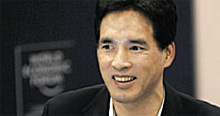 Yoshito Hori is dean of the Globis Management School, with campuses in Tokyo, Nagoya, and Osaka. He is also managing partner of Globis Capital Partners and author of several books, including Dear Visionary Leaders Who Create and Innovate the Society (PHP Institute, 2009), and Six Dimensions of Life (Kodansha, 2004). His blog, Views from an Entrepreneur, is at
 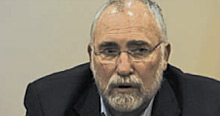 Jean-Pierre Lehmann is professor of international political economy at IMD in Lausanne, Switzerland, and is founding director of the Evian Group at IMD. Prior to joining IMD, Lehmann had a 40-year career in journalism, academe, and consulting that encompassed activities in virtually all Asian and western European countries, as well as North America.
 Timothy Ma Kam Wah is executive director of the Senior Citizen Home Safety Association in Hong Kong, a nongovernmental organization that runs a 24-hour lifeline and related services for the elderly and chronic invalids. He is president of the Hong Kong chapter of the Association of Fundraising Professionals and a cofounder of the Hong Kong Social Entrepreneurship Forum.
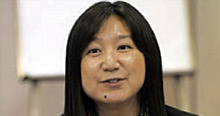 Vanessa Wang is the Asia business leader of Mercer LLC’s retirement, risk, and finance business. Based in Beijing, she works closely with Chinese regulators on issues concerning enterprise annuity and investment policies. Her clients include multinational companies, local private and public companies, state-owned enterprises, and public-sector plans in Asia and the United States.