

CEO Succession 2007: The Performance Paradox
The news this year is that even those chief executives who deliver subpar returns are showing unexpected staying power.
(originally published by Booz & Company)
 |
|
Illustration by Ross MacDonald |
One of today’s most pervasive criticisms of corporate behavior is that boards of directors are driven above all else by the stock market’s demands for short-term gains. As a result, they don’t give chief executive officers enough time to develop and implement long-term strategies that will drive sustained performance. New CEOs, the story goes, have two years to boost earnings per share — three if they’re lucky — before their impatient boards give them the ax.
The problem with this story is that it’s not true. The facts, revealed this year by Booz & Company’s annual study of CEO turnover at the world’s largest companies, suggest the opposite. To be sure, corporate boards have indeed become somewhat more likely to dismiss their chief executives since 2000 than in the previous decade. But there is no evidence that those boards are moving hastily to fire CEOs because of poor short-term results, according to our analysis of 10 years’ worth of data. In fact, we find that even the worst-performing CEOs face a low probability of being forced from office in the short term. Rather, the uptick in dismissals is due largely to an increase in board struggles.
Our current study of CEO turnover includes data for the world’s largest 2,500 public companies for 10 full years — 1995, 1998, and 2000 through 2007. This year’s data shows a continuation of many of the trends that emerged earlier in this decade. For example, the overall rate of CEO turnover — which includes planned successions, dismissals, and merger-related departures — was 13.8 percent in 2007, compared with 14.3 percent the year before. This slight decrease carries on a downward trend in turnover from the high in 2005 of 15.4 percent. Separately, we found that boards continue to dismiss CEOs at a higher rate in the 2000s than in the 1990s: In 2007, the global rate of CEO dismissals due to poor performance or to boardroom disagreements was 4.2 percent. This is well above the rates we observed in the 1990s, but near the average for this decade.
Further investigation this year, however, shows that boards have not been moving to dismiss those CEOs who deliver poor stock-price performance. Using detailed data on total shareholder returns and CEO tenure from all 10 years, we performed a comprehensive analysis of our database to ascertain for the first time whether there is any statistical relationship between substandard stock-price performance and the likelihood of a CEO’s dismissal. For all CEOs, the likelihood of being dismissed for poor performance in a given year is only 2.1 percent. Given this data, it is not surprising that the correlation between stock performance and dismissal is generally not significant. Indeed, the very worst-performing chief executives — those in the bottom decile, whose companies’ two-year stock price had fallen by 25 percent in absolute terms and whose companies had underperformed their regional industry peers by 45 percent — had only a 5.7 percent probability of termination.
The data on CEO tenure also supports our conclusion about the probability of dismissal for poor performance. If boards were increasingly replacing CEOs after two or three years of poor performance, we would see the median tenure declining. Our earlier studies found some evidence that seemed to support the hypothesis of rapid CEO replacement. However, this year, additional analysis across the full data set shows that there has been no trend toward quicker dismissal of CEOs over time. The median tenure for a CEO who left office in 2007 was 6.0 years, the same as in 1995 and the same as the average over the 10 years of our study.
Our finding of the limited correlation between shareholder performance and dismissals suggests that boards are giving underperforming CEOs more latitude than might be expected — possibly, we hypothesize, because boards lack a suitable pool of internal replacement candidates. We also found that CEOs recruited from outside the company continue to consistently underperform insiders and to make up a significant share of the departing CEO class. Moreover, we have found many North American companies continue to pursue CEO succession practices that seem questionable. In short, our research suggests that there is substantial scope for improvement in the way companies oversee chief executives, plan for successions, and develop pools of top leadership talent. Among the specific findings for 2007:
-
Overall turnover is down. At 13.8 percent in 2007, total chief executive turnover continues to fall from its high of 15.4 percent in 2005. The 2007 rate is the lowest since 2003. The slight downturn from the previous year’s rate of 14.3 percent can be attributed to small decreases in the global rate of both merger-related and forced turnovers.
-
Forced succession rates have stabilized. In 2007, 4.2 percent of CEOs were dismissed. This is a much higher rate than the 1.1 to 2.0 percent prevalent in the 1990s, but only slightly above the average of 3.8 percent in the 2000s. We attribute this increase to the legislative and regulatory reaction to corporate scandals, the rise of the corporate governance movement, and the increasing activism of institutional shareholders.
-
Europe leads in turnover. At 17.6 percent in 2007, the overall succession rate for European CEOs was significantly higher than for their North American counterparts. This can be attributed largely to a planned succession rate of 8.3 percent.
-
Boardroom infighting remains high. Board disputes and power struggles have accounted for more than one-third of all CEO dismissals since 2004, up from less than a quarter prior to that.
-
Succession patterns vary by region. The U.S. continues to favor a governance model in which the CEO also serves as chairman of the board. New North American CEOs often begin as “apprentices,” meaning that the outgoing CEO remains on the board as chairman. In Japan, outgoing CEOs always become chairman, but the role is mostly ceremonial. In Europe, few CEOs hold the chairman title, and the apprenticeship model is much less common.
-
A CEO who is also chairman is more secure than one who is not. Globally, of all CEOs departing in 2007 who never held the title of chairman, half were forced to leave, compared with 34 percent of those who held the title of chairman at the end of their tenure, and only 26 percent of those who held the title of chairman at the start of their tenure. In North America, the disparity was even greater.
-
The “two-year rule” is a fallacy. Contrary to the conventional wisdom, few CEOs face dismissal after two or three years of poor stock-price performance. Even CEOs whose companies’ stock price has fallen 25 percent in absolute terms and 45 percent relative to regional industry peers after two years face only a 5.7 percent probability of dismissal in the next year.
-
Boards still opt for outsiders; outsiders continue to underperform. More than 20 percent of all CEOs are brought in from outside the company, despite the fact that in North America and Europe, outsiders, on average, underperform insiders. For all 10 years studied, companies headed by North American outsider CEOs underperformed regional market returns by 1.0 percent on average, and the gap for European outsiders was 2.2 percent.
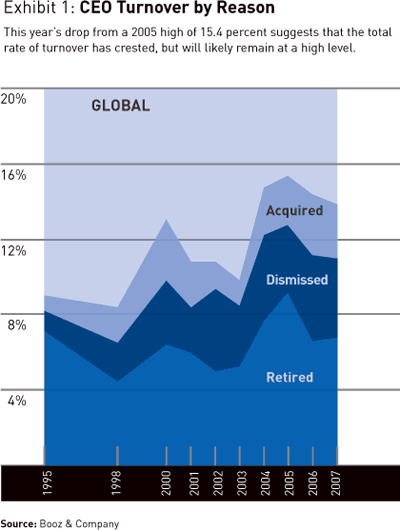
Many of the trends in CEO turnover have stabilized over the seven iterations of the Booz & Company study. The total turnover rate, which includes planned successions (due to retirement, illness, death, or long-expected changes), merger-related successions, and forced successions, reached a high point of 15.4 percent in 2005, and fell to 14.3 percent in 2006. (See Exhibit 1.) This year’s drop to 13.8 percent is less sharp, confirming our prediction in 2005 that we had crested the wave but that an ongoing high rate of succession was likely to be the norm. The rate of planned successions was 6.8 percent in 2007, just over its average for the years we have studied. At 2.8 percent, merger-related successions were down slightly from a cyclical high in 2006 of 3.2 percent. (We use press reports, public filings, and the companies’ public statements to classify each departure as planned, merger-related, or forced. For more information on the data, see “Methodology,” below.)
Regional Disparities
Europe led the world in CEO turnover in 2007, with an overall rate of 17.6 percent, compared with 15.2 percent in North America, 10.6 percent in Japan, and 9.1 percent in the rest of the world. (See Exhibit 2.) Boards of directors in Europe are more likely to dismiss their CEOs: The rate of forced successions at European companies in 2007 was 5.8 percent, compared with 4.3 percent in North America. The average share of departing CEOs who were forced out over the entire 10 years of data we have studied underscores Europe’s position as the toughest environment for chief executives: 37 percent of all European successions were forced, compared with 27 percent in North America. In Japan, where forced successions are not customary, the 10-year average was 12 percent.
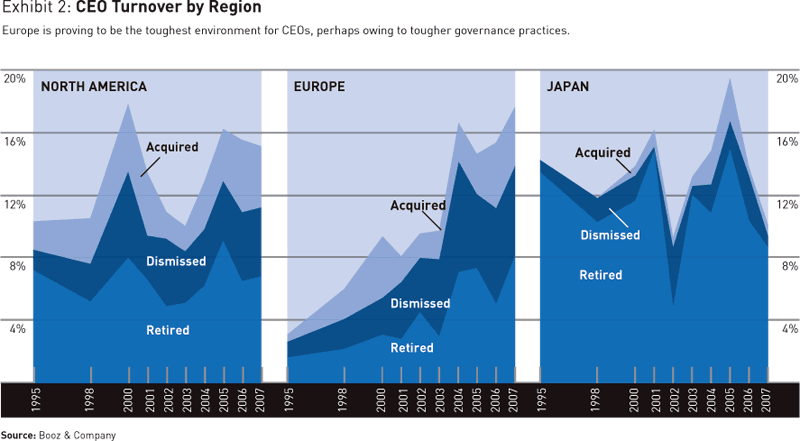
The higher incidence of CEO dismissals at European companies most likely reflects the impact of the corporate governance reforms enacted since the late 1990s by many countries, including France, Germany, Italy, the Netherlands, and the United Kingdom. We hypothesize that the cumulative result of these reforms has been a shift of power from CEOs to boards of directors and shareholders, and that the reforms have led boards to become more proactive about risk management and therefore more likely to depose a CEO when they perceive potential liability. Shareholders have also seemed to be more likely to join with supervisory boards, unions, and politicians in subjecting CEOs to greater scrutiny than they received in the past.
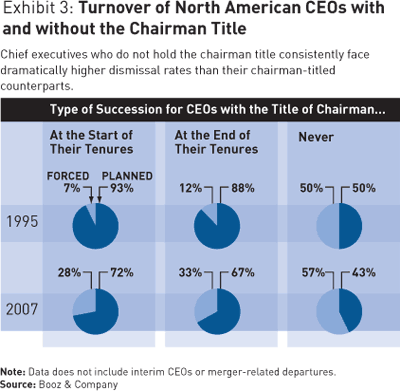
Another reason for the difference in European and North American rates of CEO dismissal may be their different CEO governance models. One important distinction is whether or not the CEO also serves as chairman of the board. In Europe, only 16.5 percent of CEOs leaving office in 2007 held both titles during their careers; in North America, nearly 75 percent did. A combined CEO–chairman is less likely to be dismissed. In North America (where U.S. companies dominate the data), for CEOs departing in 2007, the difference was pronounced: Only 28 percent who had held the chairman title from the start of their tenure were dismissed (that is, forced out), as were 33 percent who had been granted the title later; the forced dismissal rate for CEOs who had never held the title, however, was 57 percent. (See Exhibit 3.)
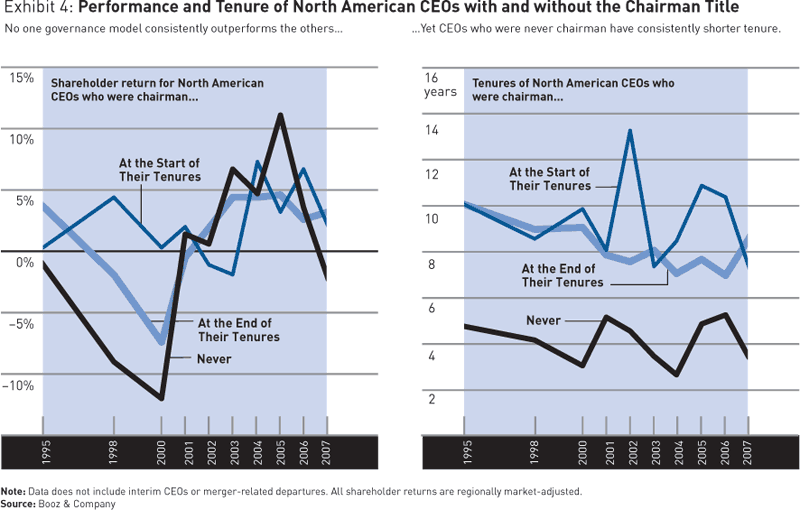
In North America, the combined CEO–chairman model persists despite long-standing recommendations from governance reformers that companies split the CEO and chairman roles. Instead, U.S. boards in particular have largely preferred to name one of the independent directors “lead director” to counterbalance the CEO. Stock-price performance data does not favor one model over the other; however, the median tenure of CEOs who have never been chairman is consistently shorter. (See Exhibit 4.) In Europe, the low number of CEOs who hold both titles reflects established governance models in many countries, which mandate separate supervisory and executive boards, as well as governance reforms that have encouraged the split of the CEO and chairman roles. (Japan follows a unique governance model whereby the CEO never holds the joint title.)
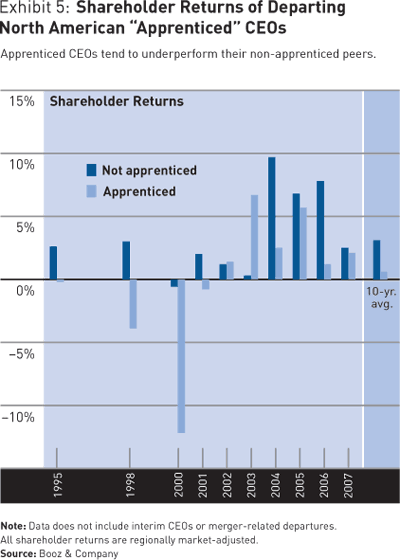 Another regional difference in governance models is the propensity of companies in some countries to appoint “apprentice” CEOs who take the reins while the outgoing CEO serves on the board as chairman, typically at the start of the new CEO’s tenure. In North America, 51 percent of the outgoing CEOs in 2007 had been apprenticed, compared with 23 percent in Europe, where the apprentice model is common only in certain countries. Apprentice CEOs generally have worse shareholder performance than other CEOs. One possible reason is that the apprenticeship model undermines the power of the new CEO, limiting his or her ability to formulate a different strategy and effect change. Another possibility is that boards resort to the apprenticeship model when they feel that the pool of candidates from which they must pick is weak. Over the 10 years for which we have data, the annualized, market-adjusted total returns to shareholders for apprenticed CEOs in North America were 2.5 percentage points lower than for non-apprenticed CEOs. The performance gap, however, varies widely from year to year. The outgoing class of 2007 had only a small gap: The apprentices’ returns lagged by just 0.4 percentage points. (See Exhibit 5.)
The Performance Disconnect
Each year, we add new features and analyses to the CEO turnover study. For our latest study, with 10 years’ worth of data for the world’s largest 2,500 companies, we performed an expanded analysis of the relationship between the total shareholder returns that CEOs produce and their likelihood of being terminated by their boards. Because our annual studies have shown that the rate of CEO dismissals shifted upward from the 1990s to the 2000s — at the same time that regulators and shareholders were becoming more activist and many nations were enacting governance reforms and legislation — we expected to find evidence that boards were increasingly using stock price as a factor in assessing CEO performance. The data, however, shows only the weakest of correlations.
Our basic methodology since we began studying CEO turnover has been to identify the chief executives at each company who left their positions during each calendar year, and to analyze their careers and the stock-price performance of their companies during their entire tenure. In effect, we have provided a look back at each year’s “departing class” of CEOs, and, in the aggregate, tried to determine factors contributing to the success of some and the failure of others. We have not, in previous years, compared the performance of companies that did not have a CEO succession. This year, we included all 2,500 companies and ran regression analyses for every year to determine which factors might increase the likelihood of a chief executive’s continuing in office for a given year, and which might increase the probability of termination.
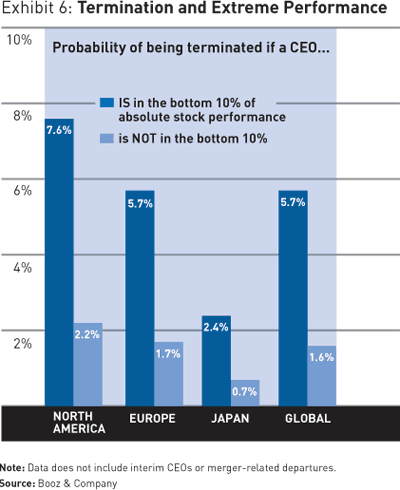 We found that only the poorest shareholder returns increase a chief executive’s chance of being dismissed. For all CEOs, we found that the likelihood of being dismissed in a given year was 2.1 percent. The impact of performance was greatest for the CEOs of companies in the lowest decile of shareholder performance — those that had experienced an absolute loss of shareholder value over two years of 25 percent or more and that had underperformed their regional industry peers by 45 percent. The likelihood of dismissal for these CEOs was 5.7 percent. (See Exhibit 6.)
There is also no evidence that terminations have become more sensitive to performance over time: The likelihood of dismissal for poor performance was no higher in the last several years than it was in the 1990s. The data suggests that the likelihood of being terminated for poor performance does increase modestly with company size. This could be because the biggest companies are subject to greater scrutiny from financial analysts and institutional shareholders.
The implication of this analysis is that regardless of the fact that CEOs have been dismissed at a higher rate in the 2000s than in the 1990s, corporate boards are not forcing out CEOs who are delivering substandard performance for shareholders. Boards of directors may, in fact, be too focused on the next quarter’s performance, as the critics of “short-termism” maintain, but if they are, it is not reflected in the rate at which they are firing chief executives.
 The Myth of the “Two-Year Rule”
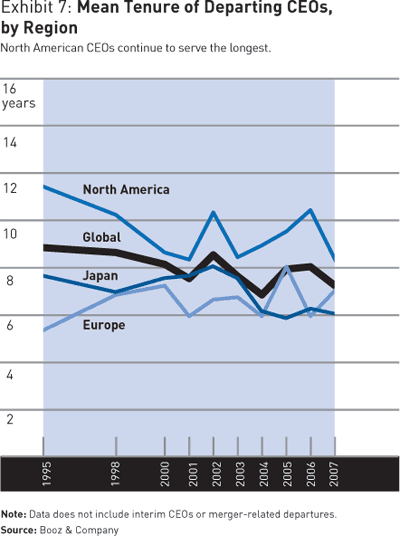
The data on chief executive tenure also contradicts the contention that the pressure for short-term stock market performance has resulted in boards dismissing CEOs after two or three years. In the past, we have used mean tenure in our analysis, and mean tenure does show some decrease, from 8.8 years in 1995 to 7.2 years in 2007. But the decrease has been neither precipitous nor consistent. The record low tenure was in 2004 (6.8 years), but mean tenure then bounced back to 7.9 years in 2005 and 8.0 years in 2006. In 2007, the mean tenure was just below the 10-year average of 7.9 years. (See Exhibit 7.)
CEOs in North America have the longest average tenure by far — 8.3 years in 2007, with a 10-year average of 9.4 years. This is likely due in part to a governance environment that favors the unified CEO–chairman model (and self-preservation), but the average is also affected by the unusually large numbers of North American CEOs who serve for 10 or more years. In the 2007 class of departing CEOs in North America, 33 percent had served for more than 10 years, compared with 18 percent at European companies.
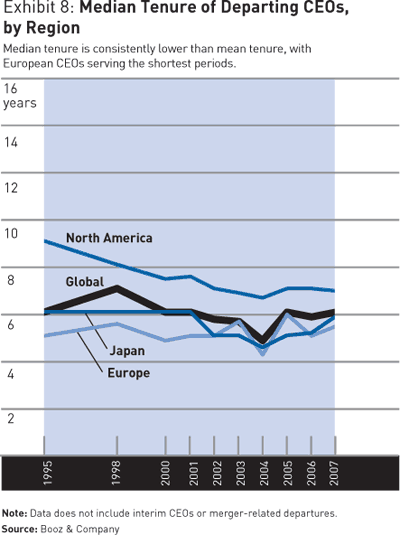 We questioned whether the prevalence of unusually long-serving CEOs might be affecting our analysis of tenure, so we recalculated the data using median instead of mean tenure, which minimizes the long tails in the data resulting from the long-serving CEOs. Using median tenure, we found no evidence of global change in tenure over time: The six-year median tenure for CEOs leaving office in 2007 was the same as for those who left in 1995, and the same as the average for the entire 10 years of data. (See Exhibit 8.)
Whether the mean of 7.9 years or the median of 6.0 years is used, the data contradicts the conventional wisdom. Boards, however preoccupied they may be with short-term stock price movements, are more patient with their CEOs than is commonly believed, and are in fact giving them plenty of time to prove themselves. Most management studies show that CEOs need three to five years to develop their strategies and see them through to the results. Our data shows that, on average, CEOs are getting that much time, and more. This holds true even for those CEOs who are forced from office. Over the 10 years of our data, the median tenure of dismissed CEOs was 4.5 years, both globally and in Europe; for those dismissed in North America, it was 5.3 years.
One reason that boards are acting slowly to replace underperforming CEOs, we hypothesize, may be that many lack a pool of candidates who are ready and able to take over the top spot. This hypothesis is supported by another finding from the CEO turnover study: North American and European boards continue to hire outsiders as CEOs, even though they consistently underperform CEOs who rose through the ranks.
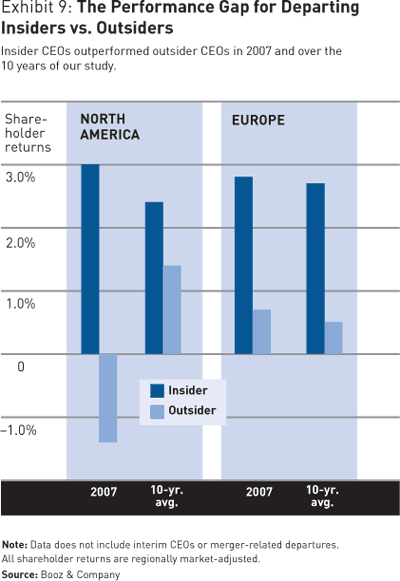 For the outgoing CEO class of 2007, 22 percent were outsiders, and over the 10 years of our study, the proportion of outsiders has fluctuated around 20 percent. The performance gap between insiders and outsiders was especially wide for outgoing North American CEOs in 2007. Total shareholder returns for insiders were 3.0 percent above the regionally adjusted market returns per year during their tenure, whereas outsiders’ adjusted returns were 1.4 percent lower. In Europe, insiders’ returns were 2.8 percent above regionally adjusted market returns, versus 0.7 percent for outsiders. Over the entire 10 years of our study, North American outsiders have underperformed insiders by 1.0 percent on average, whereas the gap for European outsiders was 2.2 percent. (See Exhibit 9.) We also found that outsiders tend to have shorter tenure than insiders: For outgoing CEOs in 2007, the median outsider tenure was 4.8 years, versus 6.4 years for insiders. For the whole 10 years, median outsider tenure was 5.0 years, versus 6.0 years for insiders.
Toward Better Succession Planning
The data we have presented suggests that although boards of directors have gotten better at managing CEO succession over the past decade, there is significant scope for further improvement. The lack of correlation between CEO performance and dismissal rates, the culture of self-preservation that persists in North American companies, the continued reliance on outsider CEOs — they all suggest that companies need to do a better job both of selecting new CEOs and, especially, of developing more future leaders from within.
The data also confirms our observations as practitioners: Some companies have simply not created the managerial infrastructure needed for evaluating and nurturing talent, and even well-managed companies often face a CEO succession event without having a viable candidate prepared to take over. Many discussions of succession planning revolve around the concept of developing a “leadership bench” wherein a few executives are identified as successors. A more comprehensive approach is to think of a multistep talent development process through which potential future leaders are identified, given wide-ranging experience, and moved up through the organization so that there is always a group of potential chief executives with a variety of capabilities that may be needed when a succession nears.
Based both on our research and on experience in advising corporations, we offer some guidance for improving CEO succession policies and procedures, and the talent development processes that support them.
-
Rethink organizational architecture. Management processes, in the context of the right organizational architecture, are key levers in developing future business leaders. The recruiting process should focus on long-term leadership needs. Traditional priorities in organizational design, such as a focus on structural lines and boxes, should be supplemented with the provision of developmental opportunities, such as general management experience. Lateral moves as well as upward moves should be used liberally, with both positioned as promotions. Potential leaders should be kept in jobs long enough to develop mastery and to be held accountable for their decisions.
-
Combine the strengths of insiders and outsiders. The job of the CEO requires the ability both to work within the system and to challenge its underpinnings. Too often, insiders are immersed in the current culture and ideology, are obsessed with execution and operational excellence, and are afraid of change because they see the costs more clearly than the benefits. The most promising potential CEOs are those who can combine the insider’s deep knowledge of how the company works with an outsider’s ability to sense external change and understand the problems the company faces and the consequences of ignoring them.
-
Build experience. A leadership role in a major corporate change campaign is an exceptional development opportunity for future leaders. These situations deliver the mix of experiences that prepare a candidate for the challenges typically faced by a chief executive, and provide leadership opportunities. The ideal assignments for leadership development are enterprise-wide initiatives that involve rethinking the business in a fundamental way, often triggered by an impending change in the market, such as the entry of a new competitor or a merger among competitors. Such campaigns require redefining the way the company competes and are focused on creating the new capabilities that will be required for success.
-
Prepare for the changeover. The goal of succession planning is to create a bench of qualified candidates from which a successor can be selected, according to the needs of the company at the time. Some typical approaches are problematic. Identifying an heir apparent, for example, restricts your options. Creating a horse race can spur a competition with negative impacts on the organization. As the CEO succession event draws nearer, a cohort of final candidates must be tested for their ability to lead change.
Deciding when to replace a chief executive and choosing the successor are among the most important decisions a board of directors must make. The decision will be easiest when the company has a deep pool of potential successors who have been selected for their ability to both understand the company’s strengths and see its potential weaknesses, who have been given wide-ranging assignments to round out their experience and expertise, and who have proven their ability to lead an organization successfully.
Our studies of CEO succession over the past several years have shown some improvements in the trends in CEO turnover, often resulting from outside pressures for improved oversight and better corporate governance. The next step in improving CEO succession — and ultimately in improving financial performance and long-term returns to shareholders — seems more likely to come from within, as management teams and boards improve their procedures for identifying and nurturing potential future leaders, and for knowing when the time is ripe for change.
|
A Head Start on Succession |
|
Many firms talk about the importance of their people, but there is little evidence that they’re working to develop future chief executives. Says Thomas Neff, chairman of the executive search firm Spencer Stuart U.S., “Very few organizations have more than one legitimate inside candidate, and an increasing number are caught without anyone properly groomed to take over.” To begin with, the systems used in most organizations to identify and nurture talent aren’t geared toward grooming leaders. Consider what happens in many companies when managers are evaluated. The reviewers examine annual performance. Those managers with disappointing results earn a trip to outplacement. Those with good results earn bonuses and promotions to bigger jobs within the same area, not lateral moves to another function so that they can broaden their skill set. Such executives rarely receive regular mentoring that would help them learn their craft, and, too often, general management responsibility comes late in their career. That means many executives have not had the chance to develop a range of skills as a strategist, change agent, and organization builder. They’ve never worried about a balance sheet or dealt with bankers, Wall Street, or the government. In companies that are run like this, performance hits a wall as executives run out of costs to cut, and the failure to invest strategically makes the company vulnerable to competitors. By contrast, a company that is trying to build leaders would evaluate the development of the entire business against objectives set at the beginning of the year, and these objectives would include leadership development. But even companies that do invest time and money in leadership development can get into trouble as succession approaches, usually for one of three reasons: the imperial style of the incumbent CEO, rapid growth, or strategic inflection. In the first case, the successful CEO has come to believe in his or her own indispensability and wisdom. Walled off by staff and exclusive offices, these CEOs lose their ability to nurture other great leaders. “Acorns seldom flourish in the shade of great oaks” is the way one wise board chairman described the problem. A particularly unhappy version of this story is the insecure CEO who surrounds himself or herself with loyalists rather than talent. Rapid growth is a different succession challenge. Unless the company has invested in the development of its people as well as its business, the scale of a company growing 40 percent a year can outpace the skills of the insiders who might take on the leadership job. Even if an inside candidate seems strong, the board may feel an outsider with experience at a larger company is a better bet. Retired Medtronic CEO Bill George, a strong believer in succession by insiders, says that rapid growth is why he brought in an outsider to succeed him. The company had grown beyond the skills possessed by the inside candidates. The board’s biggest concern in this case is that an outsider may well miss the strategic essentials that make the fast-growing company special. The third succession challenge a company might face is a strategic inflection point, a moment in the life of a business when the fundamentals must change. It’s understandable that at such a pivotal time, a board might look outside for its next leader; insiders often fail to grasp the magnitude of the change needed. This is exactly when it is especially valuable to have groomed what I call “inside outsiders.” The inside outsider is a person who can see the need for profound change but also knows the company, and especially its people, well enough to drive that change successfully. At General Electric, insider Jack Welch tore up much of his inheritance from Reginald Jones. Now Jeffrey Immelt is making major changes in what he inherited from Welch. A company has to recruit, organize, plan, and invest in ways that teach its most talented people how to lead. Those processes must be a core part of the way the company is managed. Grooming inside outsiders requires moving potential successors to assignments far from headquarters and giving them all sorts of general management opportunities and ownership of critical strategic change efforts. Top executives who understand this use the operations and planning of the company not only to drive growth, but also to develop and test a cohort of leaders. Once the company executives have a record of those leaders’ performance over time that can be examined for consistency and sustainability, it is possible for them to look for people who exhibit true leadership traits. In the words of Procter & Gamble’s A.G. Lafley, “Do they put the greater good of the company and the longer-term health of the enterprise and the organization ahead of short-term financial and operational results?” Companies that invest in a cohort of talent have several candidates to consider when the time comes for leadership to pass to a new generation. For those companies, succession is a celebration. Joseph L. Bower has been a leader in general management at Harvard Business School for 45 years. His latest book is The CEO Within: Why Inside-Outsiders Are the Key to Succession Planning (Harvard Business School Press, 2007). |
|
This study identified the world’s 2,500 largest public companies, defined by their market capitalization (from Thomson Financial Datastream) on January 1, 2007. To identify the companies among the top 2,500 that had experienced a chief executive succession event, we cross-checked data across a wide variety of printed and electronic sources, including Factiva and Hoover’s. Additionally, we conducted electronic searches for announcements of retirements or new appointments of chief executives, presidents, managing directors, and chairmen. For a listing of companies that had been acquired or merged in 2007, we used Bloomberg. Finally, staff within Booz & Company offices worldwide included CEO changes from their regions that had not previously been identified. Each company that appeared to have a CEO change was investigated for confirmation that a change occurred in 2007 and for identification of the outgoing executive: name, title(s) upon accession and succession, starting and ending dates of tenure as chief executive, the announcement date of both appointment and exit, age, whether he or she was an insider or outsider immediately prior to the start of tenure (and, if an outsider, whether he or she was an industry outsider), whether he or she had served as a CEO of a public company elsewhere prior to this tenure, whether the CEO had been chairman (and, if so, for how long), identity of the chairman at the start of the CEO’s tenure (if different) and whether that individual had been the CEO of the company, and the true reason for the succession event. Company-provided information was acceptable for each of these data elements except the reason for the succession; an outside press report was used to confirm the reason for an executive’s departure. We also enlisted the support of Booz & Company offices worldwide as part of the effort to learn the reason for specific CEO changes in their regions. Regionally adjusted average growth rates (AGRs) of total shareholder returns (TSRs), including the reinvestment of dividends, if any, for each executive’s tenure, were calculated. We performed this calculation for the entire tenure, the first and second halves of the tenure, the first two years, and the final year. TSR data for each company and corresponding region was provided by Thomson Financial. Company and regional TSRs for the three years prior to each CEO’s start date and calculated AGRs were collected as a measure of the company’s health prior to each chief executive’s tenure. This year is the 10th data year in our studies of CEO succession. We have 25,000 data points and data on nearly 3,000 CEO successions and more than 500 successions resulting from poor financial or managerial performance. This year, we greatly expanded our shareholder return data to better understand the corporate performance that can shorten a CEO’s tenure. For every company and every year, we gathered shareholder return data for the preceding four years. With this data, we can see how the level and duration of poor corporate performance changes the probability that the CEO will be dismissed. We report some of our findings in this article and look forward to presenting additional findings in subsequent articles. |
Reprint No. 08208
Author profiles:
Per-Ola Karlsson is a vice president with Booz & Company based in Stockholm. He leads the firm’s organizational change team in Europe, specializing in strategy-based corporate transformation and postmerger integration services. He has extensive experience in a variety of industries, including automotive and assembly, energy, telecommunications, and transportation, as well as private equity.
Gary L. Neilson is a senior vice president with Booz & Company in Chicago. He helps companies diagnose and solve problems associated with strategy implementation, organizational effectiveness, and efficiency.
Juan Carlos Webster is a principal with Booz & Company in New York. He specializes in advising boards and senior executives on shareholder value and corporate finance. He has worked across multiple industries on topics including value-based performance management, equity incentive compensation, acquisition support, and operational restructuring strategies.
Also contributing to this article were Booz & Company Senior Vice President Steven Wheeler and Principal Adrienne Crowther.
