

CEO Succession 2008: Stability in the Storm
Booz & Company’s annual survey of chief executive arrivals and departures shows that the financial crisis has held down the rate of CEO turnover — for now.

Illustration by Dan Page
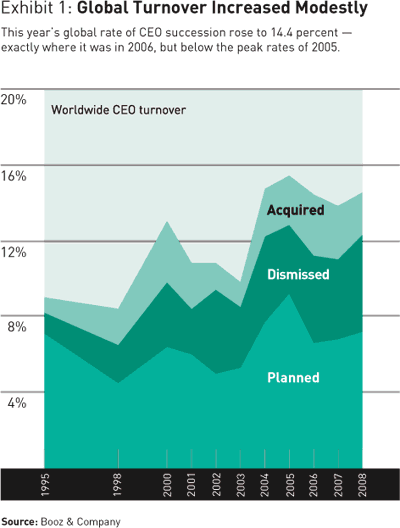
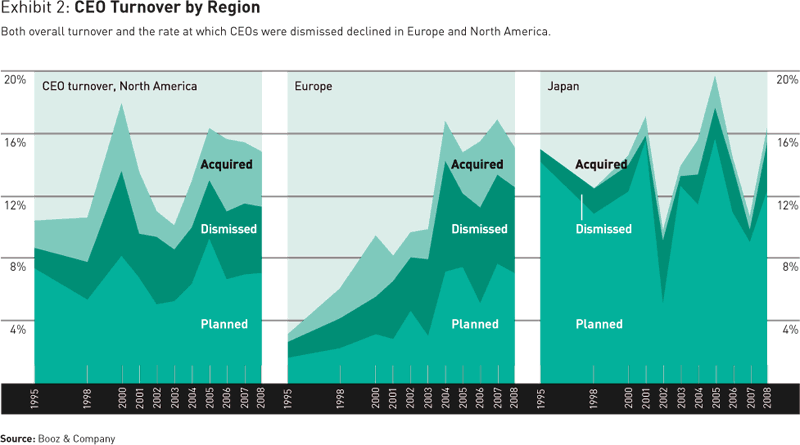
With stock prices plummeting, profits evaporating, and millions of workers worldwide joining the ranks of the unemployed, one might assume that the chief executives of the world’s largest companies lost their jobs in dramatic numbers in 2008. But that was not the case. CEOs demonstrated remarkable recession resistance last year. Although CEO turnover rose slightly on a global basis, from 13.8 percent in 2007 to 14.4 percent in 2008, Booz & Company’s annual survey reveals that turnover actually declined in North America and Europe, the regions hit first and hardest by the economic downturn. Succession rates in these bruised economies decreased by 0.5 and 1.9 percentage points, respectively — all the more surprising when one considers that Europe and North America had led other regions in CEO turnover in the two previous years.
Moreover, the reasons for CEO departures in 2008 remained remarkably consistent with past years. Of the 361 succession events among the world’s 2,500 largest public companies last year, 180 were planned (due to retirement, illness, or long-expected changes); 127 were forced (the board dismissed the CEO for poor financial performance, an ethical lapse, or irreconcilable differences), and 54 were prompted by mergers and acquisitions. (See Exhibit 1.) In 2007, by comparison, there had been 346 succession events: 169 planned, 106 forced, and 71 merger-related. To be sure, forced successions crept up in 2008 on a worldwide basis. But in North America and Europe, forced successions actually fell. (See Exhibit 2.) The worldwide drop in merger-related turnover is easy to explain: The credit crunch dried up financing for potential acquirers, and enterprise values fell to levels unacceptable to all but the most distressed sellers.
This year’s data revealed many trends, but the main message is that in uncertain times, boards of directors tend to stick with the CEO they know. Companies in a recession want a battle-tested captain at the helm — and in cases where they opt for a new chief executive, many install or retain a seasoned veteran as chairman of the board to provide oversight.
We are not suggesting that CEOs are somehow insulated from adversity or that their jobs are permanently secure. If anything, experience suggests that boards apply even greater scrutiny to chief executives’ actions and decisions in tough economic times. In many companies, the economic crisis will turn out to have been a leadership test. CEOs may have been granted safe harbor for the time being, but our view is that some will not weather the current storm, and as boards take stock of their new financial and competitive positions, turnover will once again rise.
The turmoil of 2008 affected CEO turnover most clearly in certain hard-hit industries: In financial services and energy, for example, forced turnover climbed to record rates in 2008, whereas in more recession-resistant and stable industries, such as utilities, turnover declined from already low levels. Our data also showed that regional differences in CEO turnover seem to be waning. Forced turnover in Asia, for example — once rare — is increasing to levels closer to those in Europe and North America.
This year’s study includes data for 1995, 1998, and 2000–2008. (See “Methodology,” below.) And, for the first time, it includes an analysis of the incoming class of CEOs. We can now compare this incoming-class data with the profile, demographic, and other information we’ve long collected on departing CEOs to identify leadership patterns that might affect performance at the world’s 2,500 largest public companies. We examined the career paths of the freshman CEOs who took office in 2008 — their previous positions, functional backgrounds, international experience, and high-profile assignments. We offer insights on seven action items that every new CEO should be thinking about, and we identify one institutional priority that is becoming ever more critical: the development of the next generation of CEOs. Among the specific findings for 2008:
- The age of new CEOs is climbing. The average age of this year’s incoming CEO class exceeds the average age of outgoing CEOs when they ascended to the top spot over the past decade by nearly two years: 52.9 vs. 51.0.
- Outgoing CEOs are leaving at older ages. North American and European CEOs departed office in 2008 at 59.4 and 57.2 years of age, respectively, record highs for this decade. Japanese CEOs, as usual, were older, with a mean age of 63.0 years upon departure.
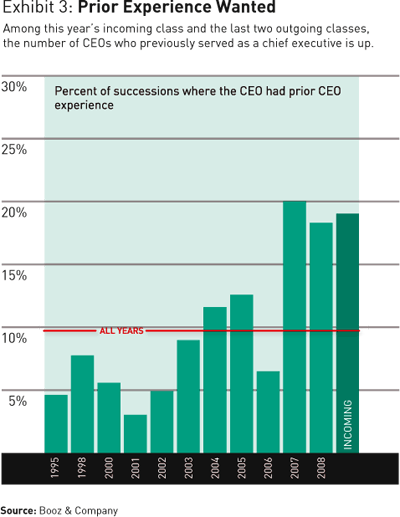
- In 2008, almost 20 percent of CEOs — both incoming and outgoing — had previous CEO experience, nearly double the 9.8 percent average rate for the 11 years we have studied. Judging by their average tenure, prior CEOs among the outgoing class of 2008 took office during the last economic downturn in 2000–2002. This supports our hypothesis that boards look for experience in times of trouble. (See Exhibit 3.)
- CEO tenure, at least in North America, is the longest it has been since 2000. Outgoing North American CEOs enjoyed a median tenure of 7.9 years in 2008, versus 7.2 years over the 11 years we’ve been analyzing data.
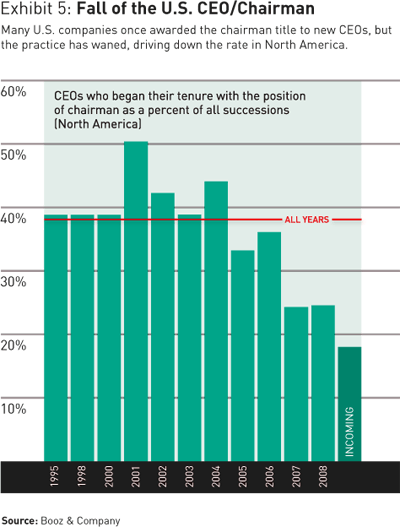
- Among outgoing CEOs in North America, there has been a dramatic shift away from the joint chairman and CEO title. In 2001, 50.5 percent had served as both chairman and CEO upon taking office. Only 24.4 percent of North America’s outgoing CEOs in 2008 held both titles when they took office, and the number is even lower for the incoming class: 18.0 percent. This latter figure brings North America more in line with other regions around the globe, where companies seldom combine the two positions.
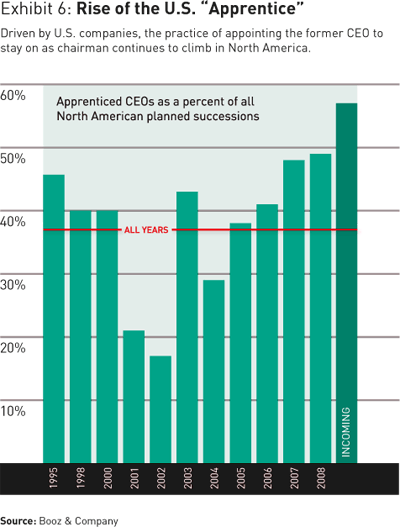
- More than half of the incoming CEOs in planned successions are assuming office as “apprentices,” meaning their predecessor as CEO has stepped up to the chairman role. This finding highlights a trend that is growing across most regions. It is particularly noteworthy in North America, where, in the past, CEOs often assumed both the CEO role and chairman role upon ascension.
- Among new CEOs, outsiders — those brought in from outside the company to take the helm — make up about 24 percent of the incoming class. (Insiders are those promoted from within.) This may represent an increase from the past; over the 11 years of the study, the percentage of outsiders leaving office has fluctuated around 20 percent.
- Fifteen percent of new insider CEOs were auditioned, meaning they joined the company they now lead within the past three years. Instead of recruiting outsiders directly into the CEO slot, boards now appear to be “road-testing” them as chief operating officer or chief financial officer before giving them the wheel.
- Many new CEOs have international experience, but most were born and raised in the countries where their companies are headquartered.
- Anecdotally, we are noticing a swelling in the ranks of boomerang CEOs, those who left the position and then returned to the same company. Howard Schultz of the Starbucks Corporation is the most visible example among several in 2008.
Sector Volatility Is at an All-Time High
Unlike the data from previous years, the 2008 data on CEO succession revealed stark differences among industries. The most exposed sectors in the global economy experienced much more forced turnover in their chief executive ranks than the average rates for the years we have studied, whereas the rates for more recession-resistant industries were actually lower. (See Exhibit 4.)
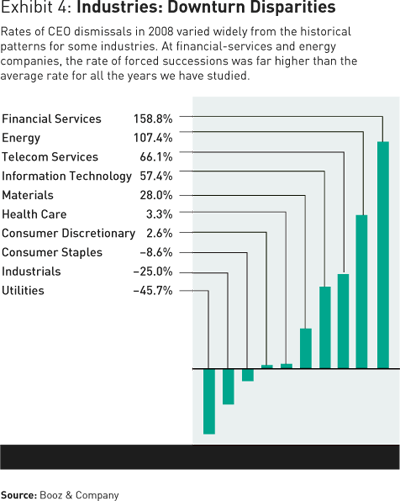
At the center of the economic maelstrom, the financial-services industry unsurprisingly experienced increased volatility in 2008. Of the 578 financial-services companies included in our study, 18 percent lost their CEOs. Of these successions, more than half were dismissals — a rate of forced succession 158.8 percent higher than the historical average. Generally, financial services is a lucrative industry that is kind to CEOs who deliver strong results and prompt in terminating those who do not. Our data supports this contention; CEOs in financial services who left as part of a planned succession delivered total shareholder returns 8.2 percent higher than their regional peers, while those who were forced out returned 5.8 percent less. Predictably, a disproportionate number of CEO successions in financial services were in North America.
But the economic downturn has also had second-order effects on succession rates in this sector. In financial services, 19 percent of all turnovers were due to merger activity, compared with just 15 percent across all industries. In addition, government intervention has influenced the pattern of CEO appointments, triggering resignations at some banks and placements of new CEOs at others. Looking forward, we see the damage done to bank CEOs’ reputations being a significant factor in future succession rates. Many bank leaders have already been vilified in the press. The risk of legal action and increased scrutiny of executive remuneration may add to the pressure that CEOs in the financial-services industry face, and to the challenge that boards face in filling CEO positions.
The other hard-hit sector in terms of toppled chief executive talent this past year was energy. As in financial services, 18 percent of the CEOs at the energy companies in our study left office, and the rate of forced succession was 107.4 percent greater than the historical average. The energy industry suffered from the effects of enormous oil price volatility in 2008, the magnitude of which many companies had not anticipated. This industry had enjoyed the comfort of steady high returns for much of the 2000s, and is now, we hypothesize, bracing for a more uncomfortable few years.
Meanwhile, other industries demonstrated greater CEO stability in 2008. As one might expect, these are industries less sensitive to discretionary spending, such as industrials, utilities, and consumer staples. CEO dismissals in all three of these industries fell below historical rates.
A quick comparison of CEO turnover at consumer discretionary companies versus consumer staples companies, for example, highlights the “recession effect” we’ve hypothesized. The consumer discretionary sector (durable goods, automobiles, and entertainment) saw turnover rise to its second-highest level in the 11 years we’ve studied (though only 2.6 percent higher than its historical average). But turnover in the consumer staples sector (household, personal, and grocery products) dropped to a five-year low. Turnover in both industries was disproportionately high in North America, the region hardest hit by the recession in 2008.
In fact, if the two most volatile sectors (financial services and energy) are removed from our data set, the resulting CEO succession rate for 2008 is the lowest we’ve seen in five years. It seems that in most industries, the recession is viewed by boards as an externality, something beyond the active control of chief executives, and therefore not something for which they can or should be held accountable — at least not yet.
Regional Distinctions: Meeting in the Middle
Industry differences in CEO succession became more pronounced in 2008, but traditional regional differences began to blur. In certain key respects, Asian companies adopted practices more typically associated with their North American and European counterparts. Specifically, we are seeing a greater incidence of forced turnover in Japan and the rest of Asia.
Whereas turnover declined in the U.S. and Europe in 2008, it increased rather markedly in Japan (to 16.9 percent from 10.6 percent) and the rest of Asia (to 13.0 percent from 9.2 percent). However, the most pronounced escalation was in the rates of forced turnover, which nearly quadrupled in Japan, from 0.8 percent to 3.1 percent, and climbed from 3.8 percent to 6.1 percent in the rest of Asia. This is a departure from the norm in Japanese business culture, where forced turnover has historically been very low; in fact, with the exception of 2002, this is the highest rate of forced CEO turnover we’ve observed in Japan over the 11 years of our study. Planned successions in Japan and Asia were up substantially, perhaps a function of unwritten “term limits” in many Japanese companies. One factor that may be affecting the data is that Asian companies have been reporting more information about CEO succession recently, allowing our study to better capture whether departures are forced.
But we should also point out that the Japanese economy has tumbled over the past decade, and the number of Japanese companies that even make our global list has been eroding steadily, particularly in the past two years. In fact, Japanese companies now constitute less than 10 percent of our total sample, as compared with 26.1 percent in 1995, and 14.9 percent as recently as 2006. There were only 38 succession events at the Japanese companies in our sample last year, 29 of which were planned. The increase in forced succession, in particular, should be understood in the context of the Japanese economy’s overall decline.
The rest of Asia, as might be expected given its growth trajectory in recent years, is emulating the mainstream in other regions in terms of CEO turnover patterns. The number of companies from the rest of Asia included in our study climbed to 569 in 2008, nearly double the 2006 count; such organizations now account for 23 percent of the top 2,500 companies worldwide. Just over half are in Greater China, including Hong Kong and Taiwan. As these companies make the transition from precipitous to more stable rates of growth, it is reasonable to foresee a heightened level of turnover; they will naturally seek out more professional managerial experience at the top of their organizations.
It is our belief, based on experience working with clients in the Asia/Pacific region, that they are also motivated by the desire for stable and steady leadership. As has long been the case, the mean age of both outgoing and incoming CEOs in Japan is much higher than it is in North America or Europe. Moreover, Asia demonstrates a far greater penchant for growing its CEO talent at home. Eighty-nine percent of the CEOs who took office in Asia in 2008 are insiders, as compared with a global average of 76 percent.
The other regional distinction where we saw outliers move toward the middle in 2008 was in the area of corporate governance, specifically the separation of the roles of chairman and CEO. North American companies (which are predominantly U.S.-based) have historically combined the two; as recently as 2007, 73.2 percent of the chief executives leaving office in North America held both titles, and 24.4 percent had done so from the beginning of their tenure. In 2001, one of every two departing North American CEOs (50.5 percent) had also held the title of chairman since taking office.
Now, fewer than one in five CEOs in North America starts out with the combined chairman and CEO role, which represents a dramatic shift. (See Exhibit 5.) According to our analysis of the 2008 freshman CEO class, only 18 percent were appointed to the chairman post, and the global figure was just 12 percent. This greater tendency to split the roles brings North America more in line with long-standing practice in Europe, Japan, and the rest of Asia, where four of every five CEOs leaving office in 2008 were never chairman.
A related phenomenon that is worthy of note is what we call the apprentice CEO, a CEO who takes office under the wing of the former CEO, who moves into the chairman role. This succession model has always been favored in Japan, where 82 percent of outgoing CEOs over the 11 years we’ve studied were apprenticed. In North America, it has been a much less prevalent practice, partly because the CEO and chairman roles were more often combined for the reasons we’ve mentioned; only 42 percent of outgoing CEOs were apprenticed over that same time period. But our analysis of the 2008 incoming class indicates that North America is moving toward the Japanese model. In planned successions, 57 percent of incoming North American CEOs are apprentices, indicating a new preference on the part of boards for seasoned hands at the helm. (See Exhibit 6.)
The New CEO Career Path
By expanding our research this year to identify and decipher patterns in data about the incoming class of CEOs, we sought to shed light on what companies can do to enhance the career options they offer to high-potential talent, and what individuals can do to improve their chances of making it to the top of their organization. As we studied the demographics and job histories of the new class of CEOs, we paid special attention to the items in their resumes over which would-be CEOs — and the companies they work for — could exercise some reasonable control. These included job assignments, international experience, and participation in high-profile strategic projects.
First, a quick look at the demographics. The CEOs arriving in office in 2008 were, as indicated, older than the departing CEOs had been at the time of their ascension. All but four were men. The vast majority had a college degree; business degrees prevailed in North America, whereas engineering and economics degrees led in Asia and Europe. At the graduate degree level, business degrees such as MBAs were the most prevalent globally.
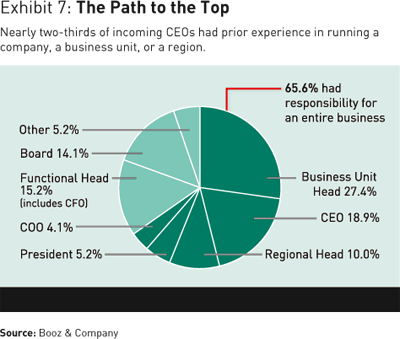
In addition to collecting demographic information, we looked at the career paths tapped by boards that recruited CEOs. For each incoming individual, we identified the highest position held prior to their appointment as CEO. (See Exhibit 7.) Naturally, most boards chose individuals who had responsibility for a P&L. Of the new CEOs, 65.6 percent had run a business; this included 18.9 percent of the total incoming class who had been CEOs before (generally, but not always, of another company); 27.4 percent who had been business unit leaders; and others who had been regional heads, presidents, or chief operating officers. Just over 14 percent had been board members, and only 15.2 percent had been promoted from a career that culminated in functional leadership, including the CFO position.
Alan Joyce, the recently appointed CEO of Qantas Airways Ltd., provides an example of a business unit head being promoted to the top job. Founding CEO of subsidiary Jetstar Airways Pty Ltd., the low-cost carrier that quickly became the fastest-growing profit center at Qantas, Joyce was a fast-rising star, and he now runs Australia’s flag carrier at the age of 42.
It is noteworthy that nearly all the incoming CEOs had held some functional role in addition to their general management experience. The most prevalent background was operations (56 percent). This was followed by finance (36 percent), strategy and planning (30 percent), and marketing and sales (24 percent).
Dirk Meyer, the new CEO of Advanced Micro Devices Inc. (AMD), is one of those who collected valuable functional experience en route to the top. In addition to playing a major line management role as head of AMD’s processor group (the company’s only business line after it spun off its flash memory group in 2005), he has been an R&D leader, serving as vice president of engineering. He is also one of the most experienced and prolific engineers in the chip industry, with more than 40 patents and many chip designs to his credit.
With rare exception, the 2,500 companies represented in this study have operations in multiple countries. So it stands to reason that international experience would be an increasingly important entry in any prospective CEO’s resume, and, indeed, 52 percent of the new CEOs we studied have held an international title, such as regional manager outside the country where the company is headquartered. That said, we have yet to see global diversity take root in the CEO suite in the form of an expatriate CEO. Only 13 percent of the new CEOs we studied were not nationals of the country in which the company was headquartered.
Muhtar Kent, the new chief executive officer of Coca-Cola Company, provides an example of the international background that may become more typical of CEOs. The son of a Turkish diplomat, he was born in New York and educated in Turkey and the United Kingdom. Kent won company acclaim guiding Coca-Cola operations in eastern Europe as the Berlin Wall came down in 1989 and running bottling operations across 12 European countries for the Australian firm Coca-Cola Amatil. From 1999 to 2005, he oversaw the significant expansion and London listing of Efes Breweries International NV, which also controls the Coca-Cola bottler in Turkey. Today, Kent looks to a future in which the bulk of Coca-Cola’s growth will come from overseas markets.
One final criterion that we assessed, though it is a hard one to quantify, was the presence of a “defining experience” in the new CEO’s history: involvement in a transformation campaign, turnaround, or major new product introduction that caused the individual in question to catch the notice of the company’s leadership and board of directors. Our hypothesis is that a well-developed, well-executed, and well-monitored career path can get a candidate onto the short list, but a defining experience often closes the deal.
For Brian Goldner, CEO of Hasbro Inc., it was a cold call he made to a Hollywood producer in 2003 that fueled his rise to the top. He pitched the idea of building a movie franchise around a set of 1980s-era action figures, and the result was a US$700 million-grossing film called Transformers that rejuvenated Hasbro’s fortunes and expanded the power and reach of its brand and characters into a new medium.
For Angus Russell of U.K.-based Shire Pharmaceuticals, it was the M&A prowess he demonstrated throughout his career that earned him top honors at Shire. He handled the spin-off of ICI’s pharmaceuticals division into Zeneca in 1993 and then as vice president of corporate finance successfully negotiated the merger of Astra and Zeneca in 1999. Since joining Shire as CFO in 1999, he has played a key role in growing the company through product and licensing acquisition and diversification.
If these defining experiences truly distinguish leaders with real CEO potential, then it may be wise to foster such experiences in preparing the next generation of executives. Our review of this study’s data and our experience as practitioners both reinforce our conviction that the best way for companies to provide these kinds of developmental opportunities for future CEOs is by investing time, energy, and other resources in leadership development.
Seven Actions for the New CEO
Today’s freshman CEOs face unprecedented challenges, but also myriad opportunities. In the absence of any clear read on when the recession will bottom out and markets will rebound, CEOs have to steer a prudent course while trying to position their companies for longer-term success. That prospect is both exciting and daunting; with the fate of the company starkly in the balance, these should be a new CEO’s first moves:
1. Declare a new day. Now is the time to reset expectations in terms of how the businesses will work, how decisions will be made (or not made), and how people will be held accountable. Most organizations offer few windows for this type of sweeping change, but the appointment of a new chief executive provides one of those rare opportunities.
New CEOs should resolve early on whether the company’s structure and operating model are the right ones. Would a redesign unleash latent productivity or better align decision making with information flows and motivators? There will be a honeymoon period of roughly one year in which these sorts of wholesale changes are easier to make. In fact, investors and other observers, both external and internal, typically expect and more willingly accept such changes early on.
2. Establish priorities. Almost immediately, a new CEO should set forth the three or four agenda items that will drive the strategic direction of the company over the next two to three years. That direction is all the more critical in the current recession.
Today’s CEOs should assess their portfolio of businesses and concentrate on those where they have a “right to win,” which we define as the advantaged assets and capabilities (tools, processes, people) that enable a company to out-execute the competition. This assessment boils down to two primary questions: (a) Is this business core to our company’s future value? (b) Does it offer a path to building financial performance that is greater than what investors can earn elsewhere in their equity portfolios? To weather the current downturn, CEOs need to anticipate their industry’s future structure and develop a game plan for securing the best competitive positioning in the upturn.
Avoid the temptation to make too many decisions too soon. Some issues will take time to percolate under new leadership or may require more considered deliberation — or perhaps none at all. New CEOs, in general, need to delegate more and second-guess less.
3. Affirm or change the team. In the first 60 days, a new CEO needs to reassure those members of the senior team who will make the cut, and deliver the bad news to those who won’t, even if their successors have not yet been identified. Until people know where they stand, it will be hard, if not impossible, to move forward productively. And there is little value in retaining business unit heads or functional leaders who are destined for replacement. The damage they may do as they await their fate can far outweigh any benefit their presence might provide.
Once new CEOs identify the top team, they can start on the real work of aligning team members around their agenda. Most CEOs occupy the center of a hub-and-spoke model with regard to their direct reports; these business and functional leaders have a direct line to the CEO, but little contact with one another. Creating a sense of collective ownership of the new strategic direction of the enterprise is vital if the new CEO wants to leverage his or her direct reports’ full potential as a team. Joint accountability also reduces silo-based behavior on an executive team, and it enables new CEOs to assess whether they made the right decisions about whom to keep on board.
4. Establish boundaries. Everyone wants the CEO’s time and attention. Although intellectually, new CEOs may appreciate this maxim, very few are prepared for the reality. According to our research, 80 percent of a CEO’s day is consumed in meetings; visits with clients; and symbolic, ceremonial events. Only one-fifth of his or her business day is actually spent behind a desk.
Those who have never served as CEO before can find the transition to public figure quite uncomfortable. They marvel at how unfamiliar many of their duties are, even though they likely ran a business prior to becoming CEO. The ones who flourish establish clear boundaries and delegate all but mission-critical tasks.
5. Keep an ear to the market. One new CEO in the oil retailing business joked that “every gas station I visit smells of fresh paint.” Indeed, everything is varnished for the chief executive; it becomes very hard to learn of bad news, because no one will volunteer it.
Since everyone inside the organization is currying favor with them, new CEOs should spend time with customers. Customers are the most likely to provide straightforward commentary on the company, and a new CEO needs that source of objective counsel. Making a point of visiting with customers also sends a powerful and positive message to others in the organization that customer service is a priority.
By the same token, new CEOs should meet with their most important suppliers and partners and proactively build relationships with the financial community. Investors, lenders, financial analysts, and others can help CEOs understand the capital markets’ view of their company and their priorities and concerns.
6. Get to know the unknown. This counsel especially applies to outsider CEOs, but many insiders also have gaps in their knowledge of the company’s operations and key value drivers. New CEOs are given a free pass during their initial months to take a “tutorial.” They can and should leverage internal authorities and seek out external experts who know the industry and company.
CEOs should also surround themselves with individuals whose critical capabilities complement their own. And they should ask questions. New chief executives who have “grown up in” the organization and long anticipated serving as CEO have a tendency to declare their point of view early in discussions, not fully realizing that their view is now taken as company strategy. It can be beneficial to step back in discussions and solicit others’ opinions and views.
7. Engage the board. Chief executives who are new to the role need to understand the board’s expectations, and in fact to help set them. Then they must deliver against those expectations in big and small ways.
As our CEO succession studies over the years have revealed, boards are much more active these days. To develop a strong working relationship, a new CEO should initiate one-on-one meetings with each board member at a place and time of the board member’s choosing. Simply encouraging board directors to reach out with suggestions or comments does not generate the same level of preparedness or thoughtful input as requesting a personal meeting.
Rather than asking the board to endorse what has already been decided, CEOs should present problems and solicit the board’s input on possible solutions. Boards are more helpful and supportive when they can see the drivers of company performance more clearly. To facilitate this, many CEOs invite board members to investor meetings or analyst conference calls.
One new CEO decided to have business unit heads present to the board directly. This gave the board a better take on upcoming leadership talent, including that of potential future CEOs.
Safe Harbor in the Storm
CEOs today find themselves in the eye of the storm. Although our study points to stability at the top of the world’s leading organizations in terms of chief executive turnover, that stability is in large measure a direct result of crisis. Boards process many variables in making CEO succession decisions, and context carries great weight. Companies across industries and regions are contending with depressed markets for their goods and services and collapsed stock prices. There’s a strong argument for not rocking the boat in roiling waters.
CEOs today need to guide their enterprises through the downturn, while seizing the opportunity to position their companies for long-term success. A key element in that transformation will be establishing a talent management strategy that develops future CEOs capable of leading diverse, multigenerational, and multicultural workforces. This storm will eventually pass, but the waves of change will continue to swell.
Building a Stronger Leadership Bench
by DeAnne Aguirre and Laird Post
In the present global economy, the challenge of developing leadership talent is urgent — particularly for the next generation of CEOs. The economic recession has highlighted the differences in the quality of leadership talent, especially in the most volatile industries, and underlined just how important it is to have a strong and deep leadership bench. In research conducted by Booz & Company, and by the Corporate Leadership Council, the effectiveness of leadership development is strongly correlated with profitability and total shareholder returns. And insider CEOs (those who have come up through the organization they now lead) generate higher total shareholder returns, which further argues for cultivating future CEO talent in-house.
Unfortunately, even where leadership development models exist, they remain mired in 20th-century assumptions about how, where, and by whom work gets done. The old ideals of highly structured hierarchies and 9-to-5 workdays no longer apply when many baby boomers (currently in their late 40s, 50s, and early 60s) are planning “never to retire,” or when Generation Y (currently in their teens and 20s) is moving through the workforce with expectations of flexible and socially conscious careers. Some members of this latter group will become the prominent business leaders of 2020 and beyond.
Profound demographic shifts already in motion will make over the employee base — and, increasingly, the executive teams — at many companies. Only 22 percent of the global educated workforce (those with a college or advanced degree) are from North America and western Europe. Women, barely present on corporate payrolls 30 years ago, now constitute at least half of the overall workforce in many developed countries. A corporation’s leadership development strategies should address the complexities of managing an increasingly diverse, multigenerational, and multicultural workforce characterized by different motivators and expectations.
What, then, constitutes an effective approach to developing the next generation of CEOs — and other high-level executive talent — from the inside? First, don’t leave it to HR alone. Leadership development must be led by all leaders. Senior management, up to and including the CEO, needs to help conceptualize, craft, and deliver leadership programs, tools, experiences, and messages. These should be carefully integrated with the business strategy, always grounded in a business case for why an enhanced leadership capability is required, what outcomes will result from leadership development, and what it will take to deliver them.
It is also important to engage the board in the process, because they ultimately own the outcome of the leadership development process. As the stewards of CEO succession, they have a vested interest in ensuring that candidates for critical enterprise roles are identified and that leaders receive the right developmental experiences, including engagement with the board.
Successful CEOs often spend the equivalent of more than a day a week making decisions about people — whom to promote, deploy, and develop, and what resources to devote to leadership development. They also spend significant time observing, coaching, and learning from their senior management team. There is no substitute for one-on-one time in crafting a tailored development program for potential successors, and this time also equips the CEO with valuable insights from those closer to customers.
This intensive leadership development approach works best when it is integrated with other HR processes, including recruiting, identification of “high potentials,” career path planning, compensation, performance management, and promotion decisions. High-potential leaders should undergo a variety of developmental experiences: general management experience, cross-functional opportunities, global experience, and opportunities to manage change and develop other talent themselves. That said, leadership development should not focus on building “renaissance” individuals who have been rotated through a battery of rapid-fire assignments and programs designed to orient them to every part of the organization’s operations. It is better to plot the career development of high-potential men and women as a diverse but well-chosen set of challenges — defining experiences that can build the distinctive, competitively differentiating capabilities that leaders, and the company, will need.
- DeAnne Aguirre is a senior partner with Booz & Company and has served global clients for the past 20 years. She specializes in talent strategies and effectiveness and is the global co-leader of Booz & Company’s Global Talent Innovation offering.
- Laird Post is a principal with Booz & Company based in San Francisco. He advises organizations in the U.S. and globally on people, leadership, and change effectiveness.
Methodology
This study identified the world’s 2,500 largest public companies, defined by their market capitalization (from Bloomberg) on January 1, 2008. To identify the companies among the top 2,500 that had experienced a chief executive succession event, we cross-checked data across a wide variety of printed and electronic sources, including Factiva and Hoover’s. Additionally, we conducted electronic searches for announcements of retirements or new appointments of chief executives, presidents, managing directors, and chairmen. For a listing of companies that had been acquired or merged in 2008, we also used Bloomberg. Finally, Booz & Company worldwide staff included CEO changes from their regions that had not previously been identified.
Each company that appeared to have changed its CEO was investigated for confirmation that a change occurred in 2008 and for identification of the outgoing executive: name, title(s) upon accession and succession, starting and ending dates of tenure as chief executive, age, whether he or she was an insider or outsider immediately prior to the start of tenure (and, if an outsider, whether he or she was an industry outsider), whether he or she had served as a CEO of a public company elsewhere prior to this tenure, whether the CEO had been chairman (and, if so, for how long), the identity of the chairman at the start of the CEO’s tenure (if different) and whether that individual had been CEO of the company, and the reason for the succession event. Company-provided information was acceptable for each of these data elements except the reason for the succession; an outside press report was used to confirm the reason for an executive’s departure. We also enlisted the support of Booz & Company staff worldwide as part of the effort to learn the reason for specific CEO changes in their regions.
Additionally, we collected data to track the career paths of the new CEO class. For each succession event in which an incoming CEO was identified, we collected the new CEO’s name; new title (for example, CEO and president); age; and educational background, including undergraduate and advanced degrees attained and names of academic institutions from which degrees were received, and additional postgraduate studies and certifications. We also collected data on insider or outsider status and prior work experience, including company and role tenure, job titles held, position level in the organization, and functional responsibility. For experience with the current company, we collected data on the new CEO’s four most recent roles; for prior company experiences, we collected data for up to two roles within up to two companies. In addition, where available, we collected data on international experiences and other notable accomplishments and positions held. For the CEO’s prior employers, we captured company and performance data from Bloomberg.
The career-path data includes CEOs — both interim and in full capacity — who were in position as of January 3, 2009. It also includes multiple CEOs for the same company if multiple succession events occurred in 2008. The career-path data excludes interim CEOs who were replaced by an official CEO before the end of 2008.
Regionally adjusted average growth rates of total shareholder returns (TSRs), including the reinvestment of dividends (if any) for each executive’s tenure, were calculated for the entire tenure, the first and second halves of the tenure, the first two years, and the final year. TSR data for company and corresponding region was provided by Thomson Financial.
This is the 11th data-year study of CEO succession. We have data points and data on more than 3,000 successions total and 960 successions resulting from board disagreements or poor financial or managerial performance.
Reprint No. 09206
Author profiles:
- Per-Ola Karlsson is a partner with Booz & Company based in Stockholm. He leads the firm’s global organization, change, and leadership practice. He specializes in strategy-based corporate transformation and organizational effectiveness and has extensive experience serving clients across Europe and the Middle East.
- Gary L. Neilson is a senior partner with Booz & Company in Chicago. He focuses on organizational transformation to increase effectiveness and efficiency for companies in North America.
- Also contributing to this article was consulting editor Tara Owen.
