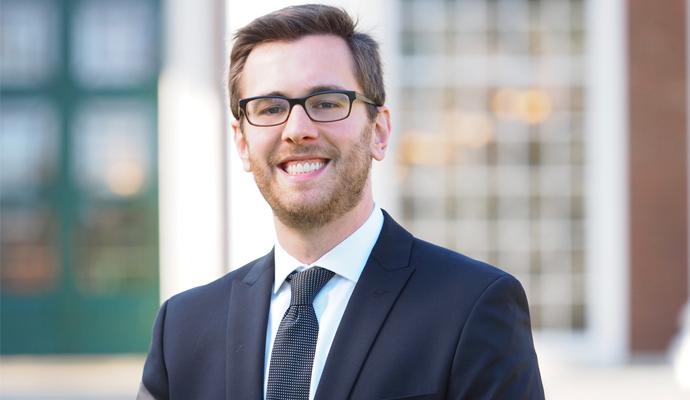
Fernando Flores wants to make you an offer
Having moved from political prisoner to cognitive scientist to Chilean senator, this uncompromising philosopher of communication is now educating business leaders for the world of social media.
(originally published by Booz & Company)Spend any time with Fernando Flores and he will assess you. He may make an offer, which you are free to accept or decline. If you accept, he will make a commitment to fulfill his promise. These simple words, or “speech acts,” form the vocabulary of a set of practices that he has deployed across three continents. Their purpose is to help organizations realize improvements in productivity, coordination, and culture — by codifying and making effective the directives and agreements at the core of business conversation.

Fernando Flores in Viña del Mar, on the Chilean coast. Photographs by Tomás Munita
Call it “commitment-based management,” “conversations for action,” or “ontological design”; Flores has used all three terms, never quite settling on a single name for his special blend of philosophy, neuroscience, and linguistics. His ideas may be rooted in dense texts most people don’t touch outside grad school, but companies as diverse as IBM, ABB, and the Mexican construction materials giant Cemex have found Flores’s insights quite useful in practice.
But wait a minute; espérate. Who is Fernando Flores? Cue the biopic movie trailer and it’s 1970. An engineer, just 27 years old, is tapped by Salvador Allende, Chile’s democratically elected socialist president, to be minister of finance. Cut to September 11, 1973, when Allende’s government is overthrown in a coup: Bombs rain on the presidential palace, and Allende takes his own life as the junta storms the building. Flores is whisked away to a secret island gulag in the Straits of Magellan. He passes three years in confinement, while his wife and five young children scrabble to survive in Santiago.
Dissolve to the Flores family being rescued by Amnesty International and reunited in northern California. Fernando Flores enters the computer science program at Stanford University and coauthors a seminal book on human cognition and artificial intelligence, a book still used in college classes today. He completes a Ph.D. at the University of California at Berkeley; starts a software company, an executive-training school, and a global consulting firm; and then steps away from them all at the peak of their success and returns to Chile in the early 2000s. There he runs successfully for the Senate and becomes a vocal crusader against the country’s divisive politics and entrenched corruption.
Flores, who is now 66, has kept headline writers at Chile’s dailies busy for years, but he is best known around the world for his research into organizational behavior and his prescient insights about social networks. In the early 1980s, when he proposed that communication and commerce should be channeled through informal connections, few people understood what he was talking about. Now the moment for his ideas seems to have arrived, and Flores is returning to Berkeley to capitalize on them. He is starting a new company that aims to incorporate education, networks, entrepreneurship, and virtual reality.
“What Fernando was talking about then is how Web 2.0 works,” says Irving Wladawsky-Berger, chairman emeritus of the IBM Academy of Technology and visiting professor of engineering systems at MIT. “The ’80s didn’t have Web 1.0, let alone 2.0, but that’s what you expect from Renaissance men and women, and Fernando seems an example of a Renaissance man.”
At the heart of Flores’s work is the realization that most communication between individuals consists not of pure information, but of prompts for action. This concept was first articulated by Cambridge University professor J.L. Austin in a series of lectures published posthumously in 1962 as How to Do Things with Words. Just in the act of saying something, Austin proposed, people can create tangible change, as when the starter at a race shouts “Go!”
Flores adds that by using language deliberately, a person can consciously shape his or her future — not in some fuzzy New Age sense, but on the more pragmatic level of constructing possibilities by giving voice to them. “Will you marry me?” opens up a potential life together, and “Write a marketing plan by Tuesday” might lead to a new business, even a new industry.
More controversially, Flores argues that there is no objective reality: that the human nervous system cannot distinguish between reality and perceptions. In practical terms, to Flores, this means that individuals and organizations are never fully trapped in any situation, even one as drastic as imprisonment — if they remain willing to change the way they think and talk about it.
“We human beings are linguistic, social, emotional animals that co-invent a world through language,” says Flores. “That means that reality is not formed by objects. That opens a different world of possibilities.”
Statements like that sound gruff and matter-of-fact when Flores pronounces them. He speaks heavily accented, highly idiosyncratic English, and has an imposing, even hulking, physical presence (the Wall Street Journal once compared him to British actor Sydney Greenstreet). At heart, his unique selling proposition is a simple one. By training people to consciously use words to articulate commitments and invoke better coordination, corporate leaders can reduce the misunderstandings and missteps that prevent so many corporations — and governments, for that matter — from realizing their potential.
Cybernetic Dreams
As the cabinet minister in charge of computer technology for Allende’s Marxist government in the early 1970s, Flores dreamed of using data processing to improve the whole Chilean government, from the top down and the bottom up. He retained Stafford Beer, a British management consultant and cybernetics expert, to develop a real-time computerized system called Cybersyn to run the entire Chilean economy. After the coup, the computers were mothballed by the military dictatorship of Augusto Pinochet, and nothing like Cybersyn has been implemented anywhere since.
“We were doing politics in a Marxist government and he was reading cybernetics,” recalls Mario Valdivia, who reported to Flores as chief economist during the Allende administration. “We were in the business of nationalizing big companies, and he was focused on putting in the business practices to put them to work.”
In retrospect, Flores never was a doctrinaire Marxist, says Valdivia. He was a pragmatic moderate. “He knew that if the government kept moving to the left, the coup was inevitable. Fernando tried to get negotiations going, between the left and the right, the military and the church, but the left were too left and the right were too right.” On the last day of the coup, Flores went to La Moneda, the Spanish colonial palace bombed by the junta’s fighter jets, “[believing] they were going to kill him,” Valdivia says.
The junta did not kill Flores, or anyone at the minister level, but independent reports document that some 3,000 people were murdered under Pinochet’s rule; at least 80,000 were incarcerated without trials and 30,000 subjected to torture. Another 200,000 people went into exile, mostly to Argentina or Peru, but also to Soviet bloc countries in Eastern Europe. Flores was passed from one prison to another, often at night, blindfolded; his family heard nothing from him or about him for the first nine months of his imprisonment.
Flores volunteers little about those times. Stories circulate that he survived three walks to the firing squad, only to be returned to his cell without explanation, that he was brutally tortured, and that a high-ranking military official intervened to keep him alive in hopes that he would ultimately serve the new government. “He was not tortured, not physically,” responds his wife, Gloria. “But, really, every day of that confinement was a torture, for him and for us.”
One uncontested fact is that the years of imprisonment turned Flores toward philosophy. As security around him gradually eased, Flores’s wife and friends smuggled books to his cell. With endless time, he read and reread, devouring the works of the German philosophers Martin Heidegger and Jürgen Habermas; of the pioneering Chilean neurobiologists Humberto Maturana and Francisco Varela; and, perhaps most significantly, of John Searle, a Berkeley professor and former student of J.L. Austin. Searle had refined Austin’s concepts into a practical set of phrases, coining the term speech acts to describe them.
Academic Entrepreneurship
Flores’s fate did not go unnoticed outside Chile. The San Francisco chapter of Amnesty International adopted him as a prisoner of conscience and successfully negotiated his release in 1976 by affirming that he had a job lined up in the United States and would thus be leaving Chile. An Amnesty member with ties to Stanford University helped create a one-year research position in computer science for him there, even though Flores’s undergraduate degree was in civil engineering.
Soon after landing at Stanford, Flores became friends with Terry Winograd, a leading light in the early days of artificial intelligence research, who introduced him to John Searle and to Hubert Dreyfus, a well-known Berkeley professor and Heidegger scholar, famous for his in-depth criticisms of the field of artificial intelligence. Dreyfus pulled strings to get Flores accepted into the graduate program in interdisciplinary studies at Berkeley. Winograd also brought Flores to the R&D institute SRI International and to Xerox’s Palo Alto Research Center, where the earliest local-area networks and graphic user interfaces were being developed.
“Computer science was not my field, but I could smell that I was in the right place,” says Flores. “I thought computers would be in networks, and networks would be about communication, not just data. I knew there was something fundamental going on, and I had the intuition that these people were wrong about computers and communication. They were doing something nice, but ungrounded. Suddenly something clicked.”
He wrote his doctoral dissertation at Berkeley on the “office of the future” (as it was then often called). He foresaw people communicating en masse through computer networks while software coordinated team efforts. It was 1982, seven years before Tim Berners-Lee began work on the World Wide Web, two years before Apple launched the Macintosh, and a year before 3Com built the first Ethernet adaptor to link PCs in a network. During the next few years, Flores and Winograd undertook several collaborative projects, including their book on the human impact of artificial intelligence, titled Understanding Computers and Cognition: A New Foundation for Design (Addison Wesley, 1986), which would become a work of long-standing influence in the field.
They also started a software company called Action Technologies, to turn Flores’s dissertation concept into computer code. One early investor was Werner Erhard, creator of the est (Erhard seminar training) program, who adapted the speech acts ideas into his own Forum training programs (a successor to est). Flores and Winograd, meanwhile, gathered a small dream team of programmers, including James Gosling, who would go on to achieve fame as the father of the Java programming language. In the mid-1980s, Action Technologies released a program called the Coordinator that organized office life around linguistic distinctions. An e-mail message had to be explicitly labeled as a “request” or an “offer,” and a meeting added to employees’ electronic calendars would be termed a “conversation for action” or a “conversation for possibilities,” depending on the intent. All of these actions were synchronized and linked across the network so people could easily coordinate scheduling and other details. This novel feature would eventually become a common function in e-mail and scheduling programs like Microsoft Outlook.
Appearing 20 years before Facebook, MySpace, and Twitter, the Coordinator was one of the world’s first social networking software applications. It received critical acclaim, but it was large and power hungry, and initially ran only on computer workstations from Sun Microsystems, which were much too expensive for broad deployment. Still, Action Technologies acquired a small but loyal customer base, and the company survives as a producer of business process management software.
Separately, Flores launched and ran Logonet, a small management training school offering an “ontological design course” for business professionals, who spent three years going through the program part-time. Over a period of 10 years, the program produced about 2,000 graduates. Many went on to start their own successful consulting firms, primarily in executive coaching. Some return to Flores’s workshops year after year.
Flores gradually reduced his role in Action Technologies, though he still owns a small stake in the company. Although Logonet’s revenues helped put his five children through the University of California, he says his greatest financial reward and the best expression of his ideas came from a third venture — a consulting firm, Business Design Associates (BDA), which peaked in 2000 at about US$50 million a year in billings, with 150 employees and a substantial presence in the U.S., Europe, and Latin America, including back in Chile.
“We were [consulting] in some of the biggest companies in the world, we priced our work at a premium, and we were successful, but we had certain problems,” Flores says. “It was demanding work for us and for the client. Normally people called us only when there was a big mess.”
BDA worked on projects as varied as logistics efficiency and credit card fraud, always with a method based on five basic speech acts: declaring, offering (and accepting offers), making requests and promises, asserting, and assessing. Flores’s teams would typically begin by training people to make explicit requests and to ask for explicit promises to perform the requested act.
For example, when asked to complete a report, an appropriate response would be, “I promise to deliver it by Friday,” not, “I’ll get right to it.” With this phrasing, the person who makes the promise chooses and stands behind a clear commitment that didn’t exist before. Flores argues that the obligations people create for themselves are stronger and more psychologically binding than the directions they are given by someone else.
“I ask companies to list their top 10 promises, how many will be fulfilled, and how many will be fulfilled on time,” says Charles Spinosa, a former BDA executive who is now group director of Vision Consulting, a Dublin-based firm that acquired limited rights to Flores’s intellectual property. “In the best companies in the world, they say about 60 percent will be fulfilled. In normal companies, it’s around 30 percent. I’d say, just imagine how your company will be affected if you raise that 20 percentage points. That’s the simplest way I know of showing the commercial potential of what Fernando invented.”
Flores teaches that offers are conditional promises; they can be used to build new relationships within a company or other group. He defines a business as “a network that allows us to make offers.” He also distinguishes assertions from assessments. Someone might assert that “John is flaky,” but an assessment is, by nature, a more reliable description of reality, since it is based solidly on observation: “John has missed his last three client calls.” Because most businesspeople are unaccustomed to making and receiving face-to-face assessments (relying instead on occasional 360-degree appraisals peppered with anonymous feedback), Flores provides a script. In organizations accustomed to what he calls the “cordial hypocrisy” of corporate life, this approach to assessment is transformative in itself. It replaces misunderstandings and resentment with trust, and it measurably improves team performance.
In his consulting days, Flores was a demanding vendor, with a plainspoken, profane style: He was known for calling client executives liars, jerks, or worse if they failed to honor commitments. At the same time, corporate employees learned through his methods to become more autonomous and entrepreneurial, as well as resilient to the slings and arrows of daily life. “My work,” he says, “is to free people from the hindrance of their own backgrounds.” Always present, if not always made explicit, was the example of his own life: If Flores could survive prison and penniless exile to prosper in a new world, so could anyone else.
Some of his students and associates came to speak fluent Flores, employing the speech acts with a consistency that bordered on the cultish. Conversations proceeded via requests, offers, and promises, and this gave Flores a reputation as one part linguistics sensei, one part Pied Piper. Perhaps because of his association with Werner Erhard, and because some of Flores’s followers were former est devotees, his name became tainted in some circles, particularly in Silicon Valley.

Senator Flores at a government building in Santiago, Chile.
“He was out there,” says Paul Saffo, a technology forecaster and visiting scholar at Stanford’s Media X research network. “He added an est-like spin to speech act theory and inadvertently created a business cult. I know several people who became acolytes of his and ruined perfectly good careers.”
Flores’s supporters discovered that using his methods with excessive zeal could have unintended consequences at home. “I started to apply this on a personal level, and it was tough with my wife and kids and friends who were not immersed in the program,” says Miguel Sepulveda, managing director of Antofagasta Railway Company, Chile’s largest private railroad and a BDA client. “You can get kind of arrogant. My father warned me not to turn into the poster boy for language.”
At the same time, Flores’s methods produced results. “Most people in our company were of engineering backgrounds, so we were very attached to a physical reality,” says Sepulveda. “When Fernando spoke of language creating reality, we started realizing the enormous potential for change. We began to question everything.” Within three years, the railway doubled the gross tonnage that it shipped, with the same number of people.
Sodimac, South America’s largest supplier of building materials and home improvement products, credits Flores with helping it successfully fight off competition from Home Depot, which ultimately retreated from South America. “It was not only the speech acts and methodology but the whole philosophy of management that he created,” says Guillermo Aguero, the former chief executive of Sodimac. “I didn’t hire Fernando because of Home Depot — it was a coincidence — but he showed us how to compete with giants.” In addition, Aguero says, Sodimac dramatically improved its supply chain and logistics practices by “understanding the complex web of relationships with vendors as a ‘network of commitment.’”
Other clients realized similar gains during the 1990s. IBM’s key electric card assembly and testing plant, which assembled 5,000 component boards a day, had already cut new-product launch cycles from 28 to 14 days, the industry average, before calling Flores. With BDA’s help, average cycle time dropped to seven days, and new products could be developed, on demand, in a single day. IBM estimated the daily cost savings at $800,000.
Return to Chilean Politics
After more than 15 years of business training and consultation, Flores began to long for a bigger stage. He had spent enough time in academia to know he didn’t belong there. He was a successful entrepreneur and no longer had to work full-time to support himself and his family. And he was tired of endless travel and clients who insisted on meeting with him personally, even when his lieutenants were more than capable. Chile’s return to democratic rule in the early 1990s had provided an opening, and in 2000 Flores moved back to his native country.
In 2001 Flores was elected senator for the Tarapacá region, in Chile’s far north, as a member of the center-left Party for Democracy (PPD), a constituent party of the governing coalition Concertación. This center-left coalition had been Chile’s majority party since the country’s transition to democracy was declared on September 11, 1980.
Flores had returned to Chile as a hero of the left and most often voted with the more liberal faction of the PPD, but he also reached out to members of the right wing, including former Pinochetistas. This was a noteworthy move in a country still riven by hatreds born of the coup, where politicians often painted their opponents as unreconstructed fascists or Communists. But Flores argued that for Chile to move forward, it had to move beyond the divisions of 1973. “I wanted to reinvent the political reality,” he says.
He soon became known as a voice of political reform, denouncing corruption in both the government and his own party. Thereafter, the Chilean media vilified him as a provocateur, his former ardent supporters on the left shunned him, and his opponents on the right ignored his overtures. With his penchant for barbed comments and zero patience for reporters’ loaded questions, Flores may also have hurt his own cause. A notorious video shows him tearing off his microphone and stomping off camera while declaring a TV interview “over,” after the commentator continued to press a line of inquiry not to his liking.
Frustrated by the paralysis and posturing of the Senate, Flores broke with the Concertación party in 2006, citing its corruption. He sought to build a base as a social activist, launching and funding independent foundations dedicated to expunging crony capitalism in government while advancing entrepreneurialism and technology. He built a private K–12 school in Chile, which now has 2,000 students, to employ his management concepts in an education arena. In some efforts, he found support from the center right.
“He transmits no hate, no animosity from things of the past,” says Andres Allamand, a fellow senator who was the founder of Renovación Nacional, an opposition party, and in his teens, an ardent supporter of Pinochet. “He’s now a key element for what is going to be a new alliance in Chilean politics.”
In January 2007, Flores launched a new political project called Chile Primero (“Chile Comes First”); at that time, he was expected to run for the presidency in 2010. But in March 2009 he announced that he would not run, nor would he seek reelection to the Senate. Instead, he threw his support behind Sebastian Pinera, a billionaire businessman — Pinera had pioneered the use of credit cards in Chile — who is running for the second time as the candidate of the center-right Coalition for Change. (The election will take place in December 2009.)
For Flores, the endorsement was a matter of simple pragmatism. He considered Pinera a capable manager who embraced many of his key initiatives. But for some former supporters and colleagues on the left, it was an act of betrayal. Their denunciations of Flores featured heavily in Santiago’s daily news accounts, along with accusations that Pinera had benefited from secret associations with Pinochet.
“This was just the typical political bullshit,” says Flores. “Politicians have a bad reputation, and they are assessed in a very mean way,” he says. “It’s not good for business. It’s not good for being a public individual. At the same time, I do not want to be involved in perpetuating division in this country. We need to learn from the U.S., Germany, Japan; they were doing business together five years after they were in a brutal war.”
An Existential Ambition
Flores may be tired of the drama of politics, but he clearly enjoys the prominent stage granted by his position. He recently convened a meeting with a dozen chief executives of Chilean companies, gathered in a boardroom atop Telefónica SA’s Chilean headquarters — a cell phone–shaped building that towers over Santiago’s smoggy central district. He opened the meeting by passing around his Kindle; none of the executives had handled one before. Then he demonstrated World of Warcraft, the immensely popular online role-playing game produced by Blizzard Entertainment. The meeting was held on behalf of País Digital, a foundation Flores created to spread the use of technology in Chile’s K–12 schools, and he told the executives that the group had sponsored 40 students in the game, playing it in English to see if it could help with language acquisition.
“To pull this group together, Fernando needs a remarkable mixture of trust and seduction,” says Mario Valdivia, the economist, who was observing the meeting. “These are distrustful guys; they have no time. And look at them, they look like kids,” he says, noting the quiet laughter, mild teasing, and surprised smiles around the table.
Flores also continues to hold workshops whenever time allows, in Santiago and in San Francisco. At a recent seminar in San Francisco, Flores worked without notes or PowerPoint slides, not so much lecturing as holding forth on the topics of the day, his own story, or the sociological consequences of one new technology or another. Alternately pontifical and profane, combative and comical, he rarely took questions, but when he asked one he clearly expected candor in response.

“You are not giving me an answer,” Flores declared to one student, who had given a vague, wandering reply to Flores’s request that he assess the value of the course so far. “If you don’t want to answer, it’s fine with me, but say so. Don’t give me this caca.”
During the three-day event, for which attendees paid $2,500, he took each student aside for a one-to-one conversation — asking each to make a personal offer to the rest of the class, to an employer, and to the world. Flores then offered his own typically blunt assessment. To one participant, for instance, he opened by saying, “I can see that you are not adept at social situations.”
This type of comment is not meant as a putdown, says Chauncey Bell, a Seattle-based consultant who was Flores’s second in command at Action Technologies and BDA. In every conversation, Flores is focused on “inventing the future that is possible for him and the human being he is talking to. He’s always had ambitions for other people that are bigger than their own.”
Flores’s next planned move will combine his three long-standing interests: social media, politics, and human potential. Like Japanese venture capitalist Joichi Ito, Flores is fascinated by the popular online role-playing game World of Warcraft as a laboratory for training and experimentation. “I am not saying playing the game will improve your leadership skills,” he says. “I know people who have played thousands of hours. They were idiots before and they are bigger idiots after. But it is a grand laboratory if you have a plan.”
He is starting a new company, as yet unnamed, which will prepare people to participate and flourish in what he calls “pluralistic networks.” This is his term for enterprises built upon a shared online world in which geographically dispersed, multicultural, and multidisciplinary teams will work on projects as diverse as creating new banking services for emerging markets and designing software-laden hybrid cars, always using (of course) explicit speech acts to communicate and coordinate.
“How do you educate people for the future world, in which an important part of activity is going to be networks?” he asks. “In my opinion, we human beings are not prepared at all for the explosion of new practices the Internet will produce. Education is going to be in networks and it will not be about knowledge. It will be about being successful in relationships, about how to make offers, how to build trust, how to cultivate prudence and emotional resilience.”
He expects these multiplayer networks to train students in the leadership skills essential to flourishing in our time. He says they will produce measurable results in weeks, not the three years required for the ontological design course that he introduced in the 1980s. And whereas the computing power required for his software was scarce and expensive back then, today it is ubiquitous and cheap, and may ultimately run on a mobile device, like an iPhone.
The new company is a Flores family enterprise. Fernando is chief technology officer; his daughter, who, like his wife, is named Gloria and who is an attorney by profession, is president and chief executive. The senior Gloria Flores, meanwhile, runs her own consulting business in Chile. Fernando also plans to start more companies with ambitious plans for learning and development that he isn’t ready to disclose. He is driven in part, he says, by concerns about the way social media is evolving and its potential for miscommunication and personal harm. Young people are creating identities on the Web with little appreciation or concern for long-term consequences; political movements, like the uprising in Iran after corruption allegations in the June 2009 presidential election, grow quickly in social applications, but those same tools help repressive regimes track opponents; and the ability to self-publish for a worldwide audience serves terrorists quite as well as it does budding poets and philosophers.
“The people who invented this technology have no idea of its problems, and that is typical throughout history,” he says. “We need to produce a human being that is skillful in shifting realities and in coping with shifts. That is a discipline that I want to create.”
In the end, if you seek a clue to Fernando Flores’s ambition — and to his potential impact on the world of business — you could look at his second book, Disclosing New Worlds: Entrepreneurship, Democratic Action, and the Cultivation of Solidarity (MIT Press, 1997). Coauthored with Hubert Dreyfus and Charles Spinosa, the book is strongly Heideggerian, drawing on the existentialist precept that the meaningful life is one of commitment. It says the best life is one spent “making history,” which the authors define as pursuing an activity that changes people’s thoughts or behaviors.
The book identifies three archetypes that are effective history makers: the entrepreneur, the social activist, and the cultural articulator. The entrepreneur seizes upon disharmony to create a cultural change. One example is Steve Jobs, capitalizing on music downloads with iTunes, and changing the way people consume music even as traditional companies struggle. The social activist maximizes engagement with the public sphere; the book cites the publicity campaign conducted by Mothers Against Drunk Driving to build awareness of the dangers of driving while intoxicated. The cultural articulator reframes the issues confronting society by talking about virtue in a new way. Thus Martin Luther King Jr. advanced the cause of racial equality by articulating the ancient Judeo-Christian concept of self and society grounded in agape, or a selfless commitment to the well-being of others.
Each of these archetypes “makes history,” say Flores, Dreyfus, and Spinosa, by finding a disharmony and persistently exploring its implications, ultimately identifying an accepted way of acting that can help resolve it.
By this definition, has Flores himself made history? Certainly not on the level of a Steve Jobs or a Martin Luther King. But he has made one clear contribution: demonstrating how the deliberate practice of conversation can transform even a hidebound bureaucracy into a network of trust, one speech act at a time.
Reprint No. 09406
Author profile:
- Lawrence M. Fisher is a writer and consultant based in San Francisco. A contributing editor to strategy+business, he covered technology for the New York Times for 15 years.