
Preparing for a Demographic Dividend
At the World Economic Forum’s fall meeting in New Delhi, five experts discussed the challenges and opportunities India faces as its population becomes increasingly youthful.
(originally published by Booz & Company)Participants were Sudhakar Balakrishnan, Thomas Crampton, Shobana Kamineni, Naresh Malhan, and C.K. Prahalad; moderated by Thomas A. Stewart.
Demographics are destiny. Countries with a large and expanding workforce and relatively few people of dependent age (under 15 or over 64) can reap what Harvard School of Public Health demographer David Bloom has called a “demographic dividend.” Young, unencumbered workers spur entrepreneurship and innovation, enabling significant gains in productivity, savings, and capital inflows. As fresh ideas flourish, governments can focus on improving infrastructure and helping to fund such critical technologies as intelligent transportation systems, smart utility grids, and renewable energy. The World Health Organization (WHO) estimates that the demographic dividend can increase a country’s GDP growth by as much as a third.

Photo copyrights: Top row (left to right): 1. Vikram Raghuvanshi; 2. Anandha Krishnan; 3. Tyler Stalman; 4. 4x6; 5. Eileen Hart; 6. Gawrav Sinha. Middle row (left to right): 1. Anandha Krishnan; 2. Juanmonino; 3. Anandha Krishnan; 4. Nikolay Mamluke; 5. Elena Korenbaum; 6. Quavondo. Bottom row (left to right): 1. Blackie; 2. Tyler Stalman; 3. Digitalskillet; 4. Anantha Vardhan; 5. Zhang Bo; 6. Andrea Gingerich
No country is better poised to take advantage of the demographic dividend than India. (See “India’s Demographic Moment,” by Nandan Nilekani, s+b, Autumn 2009.) In 2020, the average age in India will be only 29 years, compared with 37 in China and the United States, 45 in western Europe, and 48 in Japan. Moreover, 70 percent of Indians will be of working age in 2025, up from 61 percent now. Also by 2025, the proportion of children younger than 15 will fall to 23 percent of India’s total population, from 34 percent today, while the share of people older than 65 will remain around just 5 percent. China’s demographics are not as rosy as India’s, because the government’s policies to limit population growth will have created an abnormally large cohort of people over age 60 by 2040. Other emerging nations, such as Pakistan, Indonesia, and certain countries in Latin America and Africa, will produce much larger workforces in the coming years. But their demographic dividends may be inhibited by political and social instability that impedes efforts to put this young population to productive use; a country with massive numbers of unemployed young people and no constructive economic outlet for their dynamism is headed for trouble.
Although India’s stars are more perfectly aligned, its success is anything but guaranteed. The value of India’s demographic dividend will depend in great measure on whether the public and private sector have the political will and foresight not only to create jobs but also to train the new workforce, encourage global trade, improve a failing education system, provide better housing, lure capital to support innovation, and implement policies that engender confidence in the economy. Given India’s relatively strong democracy, government institutions, and entrepreneurial sector, its attempts to grapple with these thorny issues would seem to offer learning opportunities for other countries that are still a step or two away from enjoying a demographic bounty. To explore India’s prospects — what the country must do and what it must avoid; its possible economic weaknesses and how it can make the best use of its people, businesses, government, and creativity — strategy+business teamed with the World Economic Forum to host a roundtable of experts on India. (A separate s+b/World Economic Forum roundtable addressed a very different subject: the challenges presented by aging workforces in some regions, including Europe and Japan. See “Facing Up to the Demographic Dilemma,” with Yoshito Hori, Jean-Pierre Lehmann, Timothy Ma Kam Wah, and Vanessa Wang, s+b, Spring 2010.) The discussion covered a wide range of issues, from developing human talent to the urban–rural divide, and from the effects of innovation on economies to the desperate need for new neighborhoods, schools, hospitals, roads, and drugstores in emerging nations.
The discussion, moderated by Booz & Company Chief Marketing and Knowledge Officer Thomas A. Stewart, took place on November 9, 2009, at the World Economic Forum’s India Economic Summit in New Delhi.
S+B: There’s general agreement that the benefits from India’s demographic dividend will depend on its ability to better educate its least wealthy citizens. Two-thirds of Indians still live in villages and work in agriculture, and many are illiterate. What is India doing — what should India do — to close the gap between limited opportunities now and the potential for vast opportunities in the future?
MALHAN: The kind of training — the quality of the training — is more relevant than the sheer quantity of training. India must determine which specific jobs, either in India or in other countries, are most in demand now and will be in the future. And then the educational effort should be focused on increasing the needed skills first and foremost. Without this, people may get a little smarter, but they will not be employable.
BALAKRISHNAN: There is a huge gap between the skills needed to work in the agriculture sector for low wages and those needed for health care, plumbing, brick making, or other more skilled occupations where the wages are higher. The national government of India has been working with state governments to identify the skills needed and provide them. Already, I think about 400 needed skills have been identified. And while quality of training, as Naresh said, is a concern, another issue is the shortage of trainers. So all of this adds up to a training gap that could become a huge social problem. It’s a serious issue when a person spends money at a training center to develop new skills and cannot get a job when he comes out. In our training efforts, we are focusing on having quality trainers who could make sure that the students are not only finishing a particular number of hours and days of classes, but are learning to perform to a particular level.
PRAHALAD: I have a more positive view on what may happen. I am guilty of setting the goal two years ago of India having 500 million skilled workers by 2022. And that goal, seemingly far-fetched when I first proposed it, has now been accepted by the Indian government. But those numbers must force a totally different way of thinking about training. In other words, you cannot start by saying, “We need to build more schools.” My answer to that is, “You have 250,000 public schools in the country. What do they do after four o’clock? Nothing.” So you don’t have to build more schools. You just have to utilize them better and differently. You have to use them to teach workers world-class skills, monetizable skills, and also maybe language skills. If you can do that, you will get an extremely mobile, employable workforce.
The second thing that is becoming obvious and that is important is you don’t have to train people in every field. There are 400 needed skills identified, according to Sudhakar. I would say then that maybe 200 of these fields should be emphasized.
The third point I would stress is that you need to focus a lot more on the capacity to do things than on credentials. For example, to read an echocardiogram, you have to be an M.D. in the United States. But in India, people with a bachelor of science degree can read them. All the successful hospital groups in India have trained people without M.D.s to be more skilled than M.D.s in certain areas. And it’s not because they’re smarter. It’s because that’s all they do. In other words, an M.D. in the United States may see 10 echocardiograms per week in a small general hospital, but here, one paramedic sees 25 of them every day. That’s all they do. So the learning curve is steeper.
The last thing I would say is that India is not going to build skills by having people sitting in chairs in front of teachers. That is not the right way to develop more practical skills in individuals. If we can train people to fly an aircraft with simulators, we can certainly teach people how to drive a forklift truck. We totally underestimate the ability to use modern technology to both reduce the cost of training and dramatically alter people’s skills. Why can’t forklift driving be taught as a video game? And what I think is becoming obvious in India is that we must fundamentally innovate, develop new pedagogical tools, and apply technology in ways that it has not been applied anywhere else in the world.

Photo copyrights: Top row (left to right): 1. Aman Khan; 2. Anandha Krishnan; 3. Anantha Vardhan; 4. Digitalskillet; 5. Vikram Raghuvanshi; 6. Oneclearvision. Middle row (left to right): 1. TriggerPhoto; 2. Harry Hu; 3. Robert Churchill; 4. Vikram Raghuvanshi; 5. Anantha Vardhan; 6. Anandha Krishnan. Bottom row (left to right): 1. Anandha Krishnan; 2. Vikram Raghuvanshi; 3. Silvia Jansen; 4. Alexey Stiop; 5. Miroslav Ferkuniak; 6. Kemter
S+B: You’ve just been given a great segue, Tom.
CRAMPTON: Picking up on that, the problem I see in trying to develop skills is a new form of discrimination: age discrimination. Few people are willing to tap the true potential of the digital world, in which teenagers live, as a teaching platform.
Take a video game such as Counterstrike, which pits two teams of three players against each other in a commando-style raid. Communicating via chat and voice channels, these players learn to coordinate complex maneuvers under high pressure in teams that are often composed of teenagers from different continents and cultures.
First of all, a game like Counterstrike helps build intercultural communication and leadership skills that will be key as India and other emerging economies look to export high-value-added services. Second, contrast the experience a teenager has moving from the highly compelling and rich online environment of an immersive video game to a book-based system built on rote learning. If schools could learn to make mathematics and composition as compelling as online games, the generation would enthusiastically educate itself.
S+B: You’re saying that in India, and perhaps in a smaller way in other developing countries, the sheer numbers of people — the vast scale of the demographics — will force a radical rethinking of the types of things that ultimately improve a nation’s ability to teach and learn.
PRAHALAD: Precisely. In other words, if you use the lens from the West to look at India, it looks like a bloody mess. But if you start looking at India from the inside, there is a different quality, a vitality that’s not surfacing yet, but is bubbling underneath.
S+B: What’s the role of entrepreneurship? Is it important? If so, how do you make sure that entrepreneurs flourish? What policies, social architecture, and business architecture are needed?
PRAHALAD: Entrepreneurship is absolutely fundamental to India’s growth. If you look at the people on this panel, they’re all entrepreneurs to one degree or another. Apollo Hospitals Group, where Shobana works, started 37 years ago as one hospital. Now they’re adding 10 hospitals per year. India is an entrepreneurial story. India will have to continue this entrepreneurial journey to take advantage of its demographic dividend.
There are three kinds of requirements for entrepreneurs in India. First, very low capital intensity compared to the United States and Europe, but with extraordinary impact. Even now capital is not easily available to entrepreneurs. So what do you do? You start small. You make money on every project. You reinvest the money.
Second, a certain audacity that comes with low capital intensity. The growth of generic drugs in India is an example. Generics may represent only 5 or 6 percent of the world market value, but they fundamentally changed the pharma industry. The Pfizers and Mercks, which used to complain about generics, are now coming to India to buy them. Pharmaceutical companies in India have phenomenal valuations. The same is true of IT, in business process management. And it is true in the auto industry, increasingly in auto components. So, in other words, it takes a certain audacity to say, “I may be small. I may remain small compared to global companies. But I have the ability to distort the global industry structure.”
Third, the willingness to challenge the status quo, to create different business models. For instance, in pharma again: Western companies go from lab to mice to men and to market, a US$1 billion process. Indian pharmacology is exactly the opposite. The companies look for medicines that already work on people: 3,000- or 4,000-year-old treatments like Ayurveda [the Indian system of herbal- and yoga-based alternative medicine]. They figure out in the lab why it works, replicate that knowledge in clinical trials, and launch it, all for $50 million. This is called “reverse pharmacology.”
KAMINENI: We do open-heart surgery for $2,000; in the U.S. it would cost $40,000. And one of the basic reasons is that 98 percent of our surgeries are done on beating hearts, where we use the “octopus hand” [a medical device that allows the heart to continue to pump blood during an operation, potentially reducing the risk of a stroke]. In the U.S., you do this only 30 percent of the time. We take this approach because we can actually reuse the octopus 20 times, so it brings down the cost of the consumables. In the U.S., prices are not as big a concern because there’s a third party paying for that consumable. So the surgeon isn’t incentivized to be skilled in using the octopus hand. Also, we need to send the patient back home in four days because there’s pressure to make beds available. So we must use our creativity and entrepreneurial spirit to come up with solutions that keep costs down. This is both a manifestation of, and a precursor to, success in India.

Photo copyrights: Top row (left to right): 1. Paolo Florendo; 2. Anandha Krishnan; 3. Anandha Krishnan; 4. Vikram Raghuvanshi; 5. Vikram Raghuvanshi; 6. Jacob Wackerhausen. Bottom row (left to right): 1. Anandha Krishnan; 2. Thomas Gordon; 3. Digitalskillet; 4. Bijoy Verghese; 5. Anandha Krishnan; 6. Jason Stitt
S+B: Let’s change the focus to urbanization. I saw figures that 275 million people will be moving into cities in India in the next 25 years. London, Paris, New York, Tokyo — that’s maybe 30 million people. India will be creating cities with nine times that population in an extremely short period of time. Cities are engines of wealth, and they’re engines of change, engines of disruption, engines of danger, and seedbeds of crime. What opportunities and tensions does it create?
CRAMPTON: Urbanization will bring about tremendous transformations because suddenly you have hundreds of millions of people with access to broadband and mobile Internet. You have people who are able to use all these platforms for the first time. It brings them into a whole new way of being able to interact with others.
S+B: What happens as a result?
CRAMPTON: Suddenly they start doing things in very different ways, and you get these very disruptive models appearing out of nowhere. For example, in China a group of people known as Gold Farmers earn a living from winning points in the video game World of Warcraft that they sell to people in the West who want to build up their point levels.
The importance of these games to culture and the economy can be seen in the conflict going on between two ministries in China over World of Warcraft. The Ministry of Culture and the General Administration of Press and Publication both claim to control the video game market. Because video games were formerly distributed on CDs, the press administration says it’s publishing. The culture ministry, however, says it’s culture, digital life, so they should have control over it. These two ministries have broken out into warfare against one another, appealing publicly to the state council. Such open battle is unheard of in China, and it’s all over an online game. When people get into World of Warcraft and other online games, it creates this whole new dynamic, this whole new economy and new politics.
The one thing to remember, though, is that India is not like China. China has an incredible broadband infrastructure. India does not. But India is moving ahead in a big way into mobile-based Internet. It will be interesting to compare the progress and innovation of India’s mobile phone culture with Indonesia’s at the less-developed end and Japan’s at the more-developed end.
MALHAN: For urbanization to succeed, businesses will have to move into Tier Two and Tier Three cities and not get concentrated in the main metropolitan areas. This is already happening. We see a lot of infrastructure being built in new campuses in new cities that are just emerging. There is too much crowding in the big metropolitan areas like Bangalore and too much traffic. We also have a huge housing problem in most metro areas. We really need to shift business into Tier Two cities like Chandigarh, Jaipur, Lucknow, Vizag, and Mysore, and Tier Three cities like Kota, Udaipur, Jodhpur, Ambala, and Mangalore.
BALAKRISHNAN: Cellular infrastructure can move into Tier Two or Tier Three cities much faster than manufacturing. It’s easier to build out — not like an auto factory, which is less fungible. And with the cellular infrastructure, you can develop businesses in IT, financial services, mobile applications, and so on.
PRAHALAD: But I think there is still a migration problem in India: Three hundred people are moving every minute away from villages.
CRAMPTON: And many of these villages had only 300 people. So a village disappears.
PRAHALAD: Three hundred people every minute is a lot of people. India ultimately has to build between 300 and 400 new cities. It doesn’t matter how you cut it, whether it’s Tier One or Tier Two, you’re going to have 45 percent of people living in slums in totally unacceptable physical and sanitary conditions.
And the debate about the need for new cities has started only recently. People are seeing that the infrastructure in existing metro areas is already strained and cannot take the load. The story of the development of Bangalore is very illustrative. We can see its evolution in multiple, discernible steps.
Before India’s independence, Bangalore consisted of two distinct parts. One was called the cantonment, which contained the British military establishment. This was separated from Bangalore City, a self-contained civilian area. Only a few roads connected the two.
Stage two of the development of Bangalore began with the arrival of public-sector firms, especially in the areas of electronics, defense, and aeronautics. Each public-sector unit built a new self-contained township for its employees — not just factories but housing, schools, and hospitals. There was minimal traffic between the public-sector complex and the distinct parts of the main city. The public sector bore the costs of all of the “social infrastructure.”
Stage three was the arrival of private-sector high-tech industry. These firms located their facilities in a new group of special zones but did not want to pay the costs of building a social infrastructure. Consequently, employees had to find places to live that were not part of the high-tech zones. What was the result? Suddenly the patterns of traffic between the main city and all of the various zones became quite unpredictable, congested, and crazy.
The fourth stage of development was the emergence of small software companies and startups — well over 3,000 of them. These companies could not afford formal office space. They were typical “garage startups.” They sprang up all over the city and again altered the patterns of traffic.
And today, Bangalore is a complex interplay of large and small businesses and supporting ecosystems, slums, and residential areas, commingled and inseparable. It is impossible to untangle the city. Roads cover more than 25 percent of the land, but still, getting around is a nightmare.
What I’m saying is that due to the unplanned nature of its evolution, Bangalore has become an extremely difficult political problem to solve. Therefore, the solution is not necessarily only to improve existing cities (which we have to do, politically difficult as it is). The solution is to build corridors that connect pairs of new smaller cities with highways and high-speed rail so people can move in and out — and so the communities are linked to global markets.

Photo copyrights: Top row (left to right): 1. Anandha Krishnan; 2. Phil Date; 3. Pgiam; 4. Anandha Krishnan; 5. Eileen Hart; 6. Vikram Raghuvanshi. Bottom row (left to right): 1. Anandha Krishnan; 2. Vikram Raghuvanshi; 3. Adam Kazmierski; 4. Alison Grippo; 5. Aman Khan; 6. Vikram Raghuvanshi
S+B: Wealth and ideas and progress and innovation are created in clusters. It’s Silicon Valley. It’s Northern Italy for fashion and design. It happens when people get together and generate ideas. It seems to me that you can best take advantage of a demographic dividend when you can create energy around something of value in cities or in groups.
PRAHALAD: Yes, but how do clusters evolve? Recognizing a cluster after it has become a cluster is no big deal. In India, clusters are going to evolve because of entrepreneurship, and it’s no different from the United States. The auto industry evolved in Detroit because Henry Ford happened to be in the Detroit area. Nothing about Detroit logically dictated placing the auto industry there, except the entrepreneur was there. We think about clusters as some government-created entity, but not everything in India that works was created by the government. If you look at the auto clusters, in Noida, Pune, and Chennai, the government had nothing to do with them. The same is true in areas where software development activity is high or where high-volume electronics and manufacturing are prevalent. The emergence of these areas says more about where entrepreneurs live than where the government wants a cluster to be.
S+B: Where will the next wave of opportunity come from in India? If you were to offer one or two investment opportunities, or things that India must do to maximize its returns on its demographic opportunity, what would they be?
KAMINENI: Power generation is a big opportunity because the government offers a lot of financial help. You only have to invest 20 percent in a power plant and you can borrow 80 percent, tax-free for 10 years. And you get a 30 percent return on your investment. So that’s a no-brainer, because energy security still remains a great challenge. This is the case for most infrastructure projects in India for the next two decades.
But in terms of employability, scaling up, and long-term gains, health care is a great investment in India. We need 100,000 more hospital beds annually, and education facilities for doctors, nurses, paramedics, and so on. Health insurance is just emerging in India. With respect to pharmaceuticals, Glaxo, for example, sells more drugs in India than anywhere else, but the revenue is low because our prices are one-twentieth what they are in the West. When Indian prices start moving closer to those of Europe and the U.S., the health-care industry is going to explode.
S+B: So as India’s middle class, the largest in the world, starts paying prices that are closer to those in the West, particularly as people’s wages rise, the consumer market in India is going to be one of the biggest opportunities in the world. And that would suggest investing in consumer infrastructure and retail.
KAMINENI: Apollo has 1,000 retail pharmacies. We opened them all in 1,000 days; a drugstore a day. We know retail is going to be a huge opportunity.
I want to give you one last thought that we haven’t touched on. One of the best things about India, culturally, is that we’re very environmentally sensitive, and we’re very frugal. So, whenever we talk about urbanization and its problems, you have to remember that we know about recycling and conserving energy use. So you can’t apply the same factors that would exist in a city in the West to India’s cities.
MALHAN: I think smart money will be invested in inclusive growth. Investors should look at where their money can have a multiplicative effect. In our current situation that means investing in education, vocational training, and entrepreneurship.
The starting point is educational training — and it has to be training that involves the eye, the hand, and the mind. It must also take place across various sectors of the economy, including agriculture.
CRAMPTON: I’d put connectivity as the top priority. With connectivity, you’re going to suddenly find all these scalable solutions that were never available before. The difference between somebody who can get online only a little and someone who cannot get online at all is massive. If you can make it an objective to provide people with connectivity, they will find ways to solve problems before they become big. Solutions will arise that would otherwise have been totally unavailable. Some skill problems may start to solve themselves, as Professor Sugata Mitra of NIIT [an Indian IT training company] in Delhi found after placing a computer in the wall of the institute. Children from the adjoining impoverished neighborhood began teaching themselves how to use computers, and unsupervised computer learning was born. You’ll also find online universities growing to fill a huge portion of the training agenda.
BALAKRISHNAN: If you look at Indian pay rates, they are among the lowest in the world; 30 or 40 rupees [64 to 85 cents] a day, a little more in some sectors. If you can add skills and educate people, they can start earning more and buying more products. Consumerism would encourage more commercial growth and, with domestic demand being so high already — almost 65 percent of our GDP — it would bring a lot of wealth into the bottom of the pyramid.
PRAHALAD: India’s success or growth is going to depend on 800 million ordinary people, not a village. In other words, the bottom of the economic pyramid is a fundamental source of innovation. The final point I want to make is that connectivity, sustainability, environmental stewardship, inclusive growth from the bottom to the top of the pyramid, and globalization are all joined at the hip, yet few people are looking at all of them together. They tend to be viewed as independent pieces, as unique problems that can be addressed separately. But that is not the case. It’s a tall order, but all of them will have to be addressed simultaneously and in a coordinated fashion for India to take advantage of its demographic opportunity. 
Reprint No. 10205
Roundtable Contributors:
-
 Sudhakar Balakrishnan is CEO of Adecco India, a staffing and human resources services firm based in Bangalore. He was formerly an executive at several Indian companies, including ABC Consultants and Sify.
 -
Thomas Crampton is the Asia/Pacific social media strategy director for Ogilvy Public Relations Worldwide, part of WPP PLC. Based in Hong Kong, he was formerly a columnist and correspondent with the International Herald Tribune and the New York Times.
-
Shobana Kamineni is executive director of new initiatives for the Apollo Hospitals Group, which operates 46 hospitals in India and overseas; neighborhood diagnostic clinics; a chain of pharmacies; and divisions involved in medical business process outsourcing, health insurance, and clinical research.
-
Naresh Malhan is managing director of Indian operations for the employment services firm Manpower Services India Private Ltd. He was formerly managing director for marketing and operations at Xerox India and president of the consumer market business unit at Tata Teleservices.
-
C.K. Prahalad passed away on April 16, 2010. He was the Paul and Ruth McCracken Distinguished University Professor of Strategy at the University of Michigan’s Stephen M. Ross School of Business and coauthor of several significant books, including The New Age of Innovation (McGraw-Hill, 2008) and The Fortune at the Bottom of the Pyramid (Wharton School Publishing, 2005).
- Photographs of the roundtable contributors courtesy of the subjects, with the exception of Shobana Kamineni: © India Today Group/Getty Images
 Sudhakar Balakrishnan is CEO of Adecco India, a staffing and human resources services firm based in Bangalore. He was formerly an executive at several Indian companies, including ABC Consultants and Sify.
 Thomas Crampton is the Asia/Pacific social media strategy director for Ogilvy Public Relations Worldwide, part of WPP PLC. Based in Hong Kong, he was formerly a columnist and correspondent with the International Herald Tribune and the New York Times.
 Shobana Kamineni is executive director of new initiatives for the Apollo Hospitals Group, which operates 46 hospitals in India and overseas; neighborhood diagnostic clinics; a chain of pharmacies; and divisions involved in medical business process outsourcing, health insurance, and clinical research.
 Naresh Malhan is managing director of Indian operations for the employment services firm Manpower Services India Private Ltd. He was formerly managing director for marketing and operations at Xerox India and president of the consumer market business unit at Tata Teleservices.
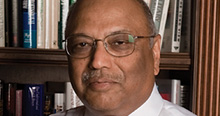 C.K. Prahalad passed away on April 16, 2010. He was the Paul and Ruth McCracken Distinguished University Professor of Strategy at the University of Michigan’s Stephen M. Ross School of Business and coauthor of several significant books, including The New Age of Innovation (McGraw-Hill, 2008) and The Fortune at the Bottom of the Pyramid (Wharton School Publishing, 2005).